
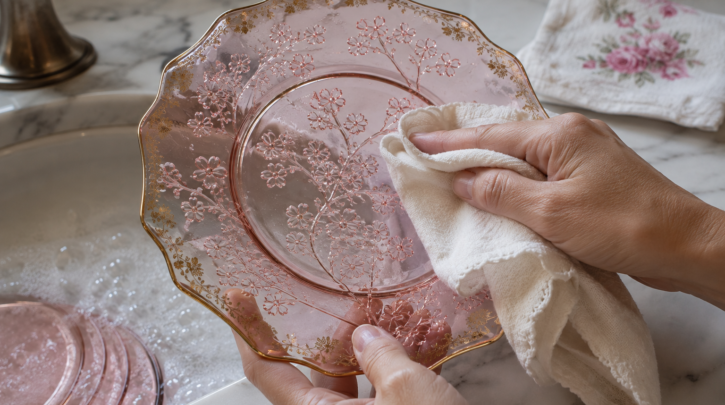

Depression glass is nearly a century old, made using manufacturing processes that weren’t built for modern dishwashers or harsh cleaning chemicals, and the most common damage collectors cause is entirely avoidable once you know what to skip.
Hand Wash Only
Wash Depression glass by hand with warm (not hot) water and a mild dish soap, using a soft cloth or sponge rather than anything abrasive. This simple routine avoids nearly every common cause of damage, and it’s genuinely all that most pieces need to stay clean and presentable.
Skip the Dishwasher Entirely
Dishwashers combine heat, harsh detergent, high water pressure, and physical agitation against other items, any one of which can chip, crack, or cloud antique glass — and the combination of all four makes a dishwasher one of the fastest ways to damage a piece that survived nearly a hundred years of careful handling before it reached you.
Avoid Sudden Temperature Changes
Thermal shock — a sudden shift from cold to hot or hot to cold — can crack glass that shows no other sign of weakness, so let a piece stored in a cold room come closer to room temperature before washing it in warm water, and never rinse a piece straight from hot water under cold, or the reverse.
Understanding ‘Sick Glass’
Cloudiness in old glass, often called “sick glass” by collectors, usually comes from mineral deposits in hard water etching into the glass surface over years of use, particularly from repeated dishwasher exposure or long-term water contact, like a vase left with standing water. This isn’t surface dirt that wipes away — it’s actual microscopic etching, which means it often can’t be fully reversed with home cleaning methods.
Professional Glass Polishing
Professional glass polishing services exist and can sometimes improve or resolve sick glass by removing a microscopically thin layer of the etched surface, but this process carries real risk — it can subtly alter a piece’s original surface and, in some collector circles, affects how a piece is regarded compared to one in its original, unaltered condition. It’s worth researching a specific service’s reputation and being clear about your goals (personal use versus resale to serious collectors) before committing to this option.
Handling Gold and Metallic Trim
Some Depression glass pieces feature gold or platinum decorative trim, which is more delicate than the glass itself and can degrade with extended soaking or abrasive cleaning. Wash trimmed pieces quickly rather than letting them sit in water, and avoid scrubbing directly over any metallic decoration.
Storage Tips
- Avoid stacking pieces directly on top of each other; use padding or felt between stacked plates and bowls
- Keep colored glass out of prolonged direct sunlight, which can fade some colors gradually over many years
- Store on stable shelving away from vibration or frequent handling
- Avoid leaving standing water in vases or covered dishes for extended periods
When Damage Affects Value
Chips, cracks, and significant cloudiness all reduce a piece’s value, sometimes substantially, which is one more reason gentle, consistent care matters even for pieces you don’t plan to sell right away; see our value guide for how condition factors into overall worth.
Cleaning Newly Acquired Pieces
A piece just brought home from an estate sale or antique mall often carries decades of dust, kitchen residue, or basic grime that a gentle hand wash resolves easily, but resist the urge to scrub hard at anything that doesn’t come off immediately — it may be sick glass etching rather than surface dirt, and aggressive scrubbing risks scratching the surface further without actually removing anything.
A Simple Ongoing Routine
For pieces in regular display or occasional use, an infrequent gentle dusting and an occasional hand wash is typically all that’s needed to keep Depression glass looking good indefinitely — the goal is consistent, gentle care over decades, not intensive cleaning sessions that risk more damage than the dust they’re removing.
Patience with a soft cloth beats any amount of scrubbing power for glass this old.
A Note on Repaired Pieces
Some older pieces circulating today have been repaired at some point — a reglued handle or a filled chip — and these repairs can be sensitive to water, heat, or cleaning chemicals in ways the original glass isn’t. Inspecting a piece closely before its first cleaning, ideally in good light, helps catch a prior repair before an aggressive cleaning method makes it worse or causes it to fail entirely.