 Written by: Vintage Glass Guide Editorial Team
Posted on: October 1, 2026
Written by: Vintage Glass Guide Editorial Team
Posted on: October 1, 2026
Depression Glass Manufacturers: Hazel-Atlas, Jeannette, Federal & More
Most collectors learn to identify Depression glass by pattern long before they learn to identify it by maker, and that’s a reasonable place to start. But once you’re past the basics, knowing which company actually pressed a piece changes how you shop, how you price,…
 Written by: Vintage Glass Guide Editorial Team
Posted on: July 9, 2026
Written by: Vintage Glass Guide Editorial Team
Posted on: July 9, 2026
Where to Buy Antique Glass: A Complete Buying Guide
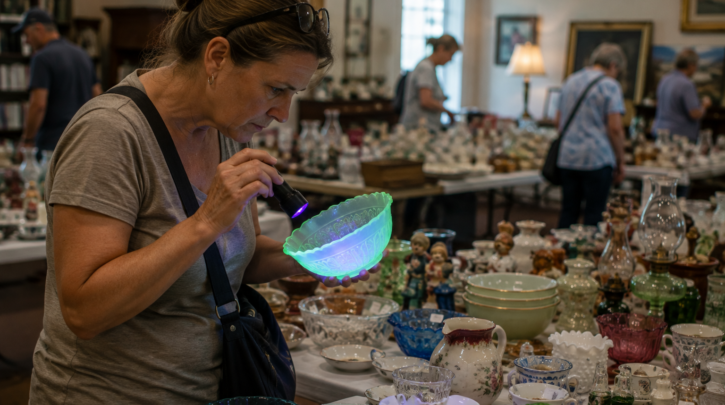
Antique glass has two sourcing considerations that don’t apply the same way to furniture, ceramics, or paper collectibles: it breaks, and a big part of authenticating it — specifically confirming genuine uranium content under UV light — only really works in person. Every venue in…
 Written by: Vintage Glass Guide Editorial Team
Posted on: July 9, 2026
Written by: Vintage Glass Guide Editorial Team
Posted on: July 9, 2026
Antique Glass Appraisal Guide: What to Check Yourself Before You Pay
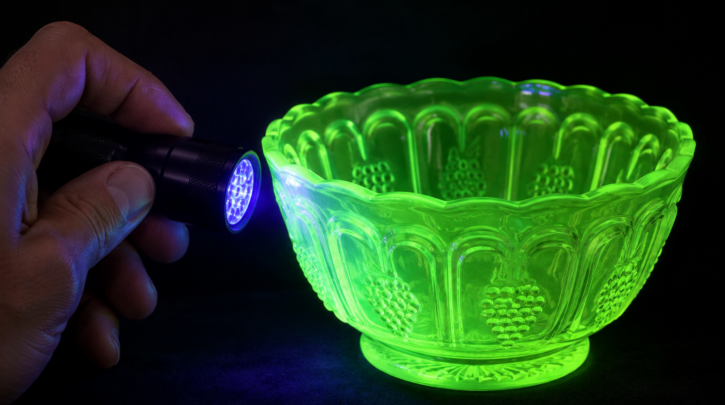
Not every piece in your cabinet needs a professional appraisal — and several of the most common questions people pay an appraiser to answer can actually be checked at home first. A $15 UV blacklight can confirm genuine uranium glass in under a minute. A…
 Written by: Vintage Glass Guide Editorial Team
Posted on: July 9, 2026
Written by: Vintage Glass Guide Editorial Team
Posted on: July 9, 2026
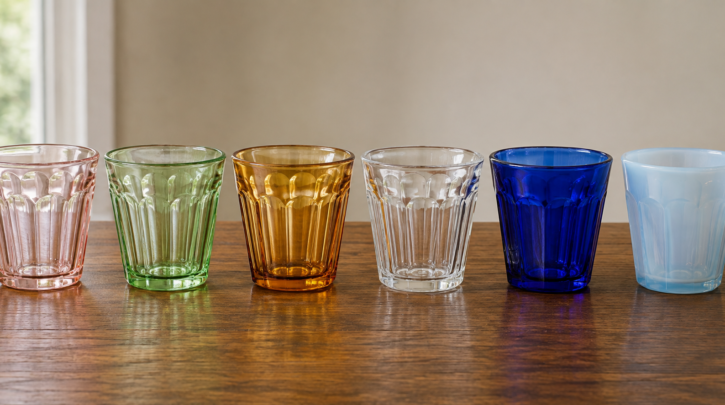
How to Sell Antique Glass: A Complete Selling Guide
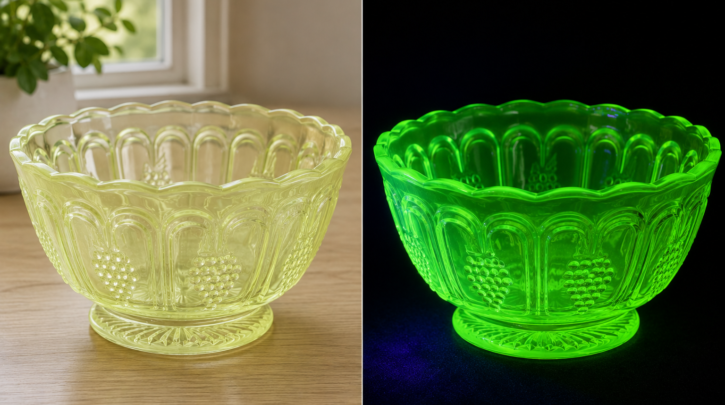
Selling antique glass well comes down to the same groundwork every category guide on this site has already covered — know what you actually have, represent it honestly, and price it against real recent sales rather than wishful thinking. But this category has one documentation…
 Written by: Vintage Glass Guide Editorial Team
Posted on: July 9, 2026
Written by: Vintage Glass Guide Editorial Team
Posted on: July 9, 2026
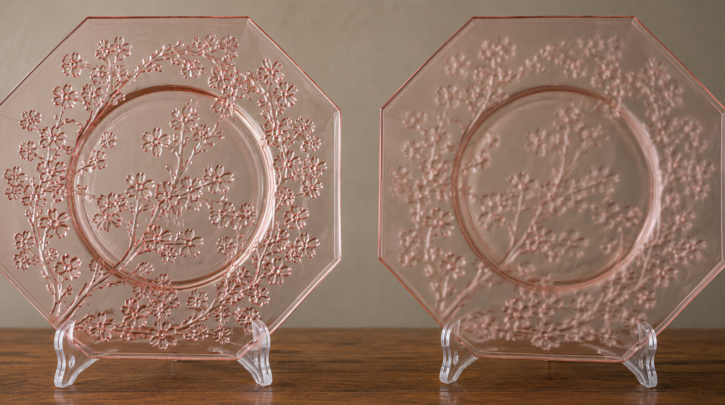
Depression Glass Colors: A Guide to What You’re Looking At
Color does real identification work in Depression glass, since most patterns were only ever produced in a specific, limited set of colors — which means a piece in the “wrong” color for its pattern is one of the clearest signs something isn’t original. Pink Pink…
 Written by: Vintage Glass Guide Editorial Team
Posted on: July 9, 2026
Written by: Vintage Glass Guide Editorial Team
Posted on: July 9, 2026
Depression Glass Reproductions and Fakes: What to Watch For
Reproductions are the single biggest identification challenge in Depression glass collecting, and they’ve been on the market long enough — in some cases since the 1970s — that plenty of “vintage” pieces in circulation today are actually decades-old reproductions rather than originals from the 1930s….
 Written by: Vintage Glass Guide Editorial Team
Posted on: July 9, 2026
Written by: Vintage Glass Guide Editorial Team
Posted on: July 9, 2026
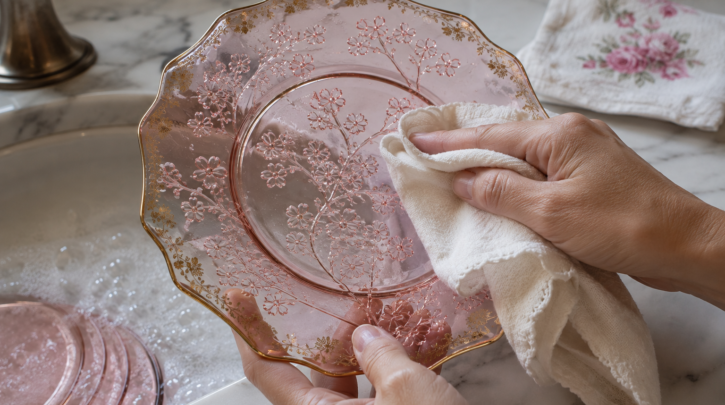
How to Clean Depression Glass Safely
Depression glass is nearly a century old, made using manufacturing processes that weren’t built for modern dishwashers or harsh cleaning chemicals, and the most common damage collectors cause is entirely avoidable once you know what to skip. Hand Wash Only Wash Depression glass by hand…
 Written by: Vintage Glass Guide Editorial Team
Posted on: July 9, 2026
Written by: Vintage Glass Guide Editorial Team
Posted on: July 9, 2026
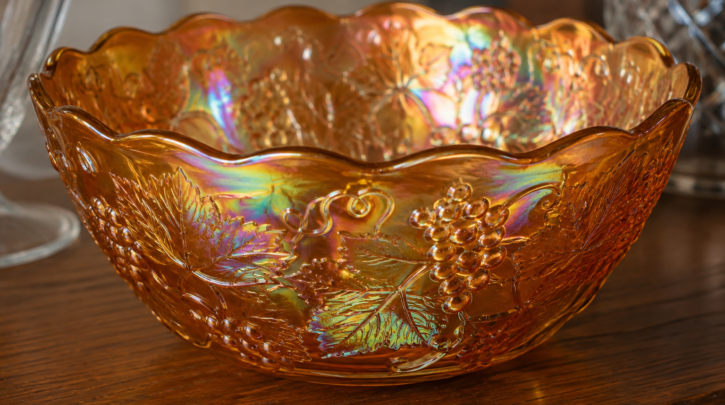
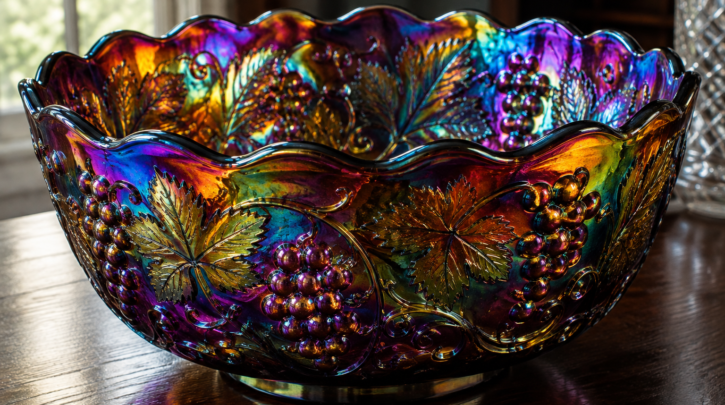
Carnival Glass Identification: A Complete Guide
Carnival glass is pressed glass finished with an iridescent, metallic surface coating that shimmers with shifting rainbow color — and despite the name, it wasn’t originally made as carnival prize glass at all, which is one of the more interesting quirks of how this category…
 Written by: Vintage Glass Guide Editorial Team
Posted on: July 9, 2026
Written by: Vintage Glass Guide Editorial Team
Posted on: July 9, 2026
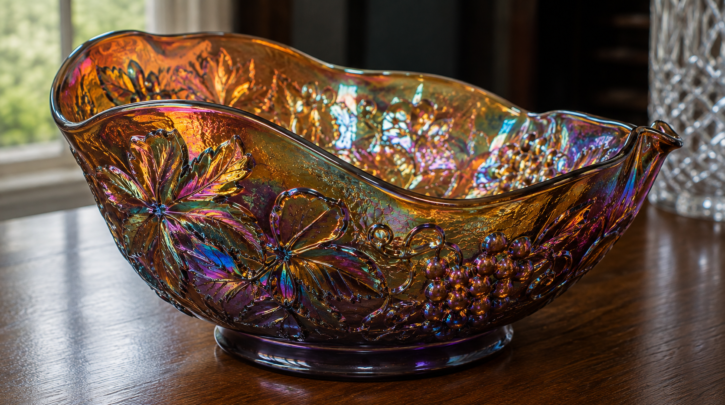
Carnival Glass Makers: The Big Four and Beyond
Four American glass companies — Fenton, Northwood, Imperial, and Millersburg — are collectively known among collectors as the “Big Four,” and together they account for the large majority of classic-era carnival glass that collectors actively pursue today. Fenton Art Glass Founded in 1905, Fenton is…
 Written by: Vintage Glass Guide Editorial Team
Posted on: July 9, 2026
Written by: Vintage Glass Guide Editorial Team
Posted on: July 9, 2026
Most Valuable Carnival Glass: What Drives Price
Most carnival glass, particularly common marigold pieces in well-known patterns, remains genuinely affordable — real value concentrates in a smaller set of rare base colors, scarce makers, unusual patterns, and one-of-a-kind experimental shapes. Base Color Is the Biggest Single Factor As covered in our colors…