
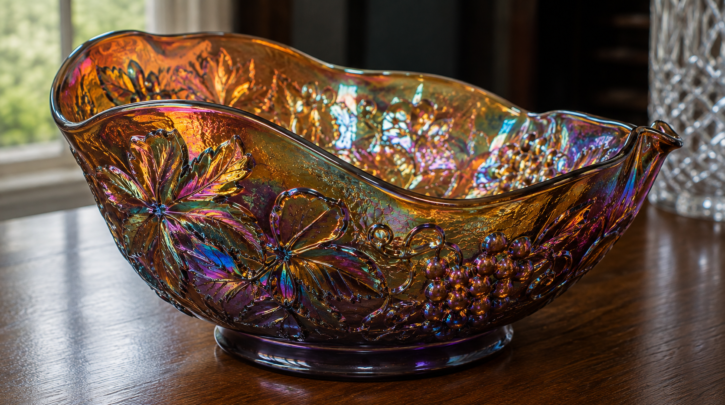

Most carnival glass, particularly common marigold pieces in well-known patterns, remains genuinely affordable — real value concentrates in a smaller set of rare base colors, scarce makers, unusual patterns, and one-of-a-kind experimental shapes.
Base Color Is the Biggest Single Factor
As covered in our colors guide, base color rarity drives value more consistently than almost any other single factor — red and aqua opalescent pieces routinely sell for many times what the same pattern and shape would bring in common marigold.
Maker and Production Scarcity
Millersburg’s short, financially troubled production run makes its pieces inherently scarcer than output from longer-running companies like Fenton or Imperial, and that scarcity translates directly into higher typical prices; see our makers guide for how each major maker’s production history shapes rarity today.
Pattern Rarity
While iconic patterns like Grape and Cable or various peacock designs are well documented and actively collected, some far less common patterns were produced in much smaller quantities and can command real premiums specifically because so few examples survive, even in a relatively common base color.
Whimsey Pieces: The One-of-a-Kind Category
Whimsey pieces are experimental or reworked shapes that factory workers created by reshaping a standard mold’s output into something unusual — a bowl reworked into a different rim shape, for example — rather than sticking to the standard production form. Because these were essentially one-off or extremely limited factory experiments rather than regular production, whimsey pieces are prized by serious collectors and can command some of the highest prices in the entire category.
Condition Still Matters
Chips, cracks, and iridescent finish that has worn thin or flaked all reduce value, sometimes substantially — the iridescent coating in particular is a surface treatment that can wear with heavy handling or harsh cleaning over decades, so condition assessment needs to account for the finish specifically, not just the glass structure underneath.
Being Honest About Market Value
As with any collectible category, published price guides can lag well behind actual current market conditions, and carnival glass values shift with collector demand over time just like any other antiques category. Checking recent completed sales rather than relying solely on an older printed guide gives a far more accurate current picture.
Check current carnival glass listings and completed sales Search carnival glass on eBay
When to Get a Professional Opinion
For a piece that seems like it could be a rare color, an unusual whimsey shape, or a scarce Millersburg piece specifically, a professional appraisal is worth the cost before selling, insuring, or assuming a value based on a quick online search alone; see our appraisal guide for how that process works.
Building a Realistic Sense of a Collection
For anyone assessing an inherited or long-accumulated collection, sorting pieces by base color first, then checking pattern and maker where recognizable, quickly separates the handful of pieces worth researching further from the larger number of common marigold pieces that, while still genuinely nice glass, aren’t going to be individually valuable.
Value Beyond Resale
Not every piece needs to be assessed purely for resale potential — a full set of common marigold pieces can still be a genuinely attractive, cohesive display or a piece of family history worth keeping regardless of what it would fetch at auction; see our cleaning guide for keeping a collection looking its best whether or not you ever plan to sell it.
How Shape Interacts With Color and Pattern
Beyond color and pattern individually, the specific shape a pattern was molded into — a large punch bowl set versus a small individual dish, for instance — adds another layer to value, since some shapes within a pattern were produced in far smaller numbers than others even in the same color. A rare shape in a common color can sometimes outvalue a common shape in a moderately rare color, which is why experienced appraisers weigh all these factors together rather than applying any single rule mechanically.
This is exactly why two seemingly similar pieces can sell for very different prices, and why a quick glance rarely substitutes for actually checking all four factors together.