 Written by: Vintage Glass Guide Editorial Team
Posted on: July 9, 2026
Written by: Vintage Glass Guide Editorial Team
Posted on: July 9, 2026
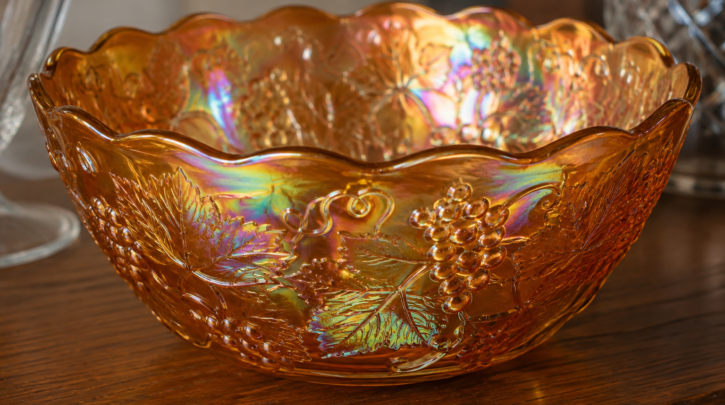
Carnival Glass Identification: A Complete Guide
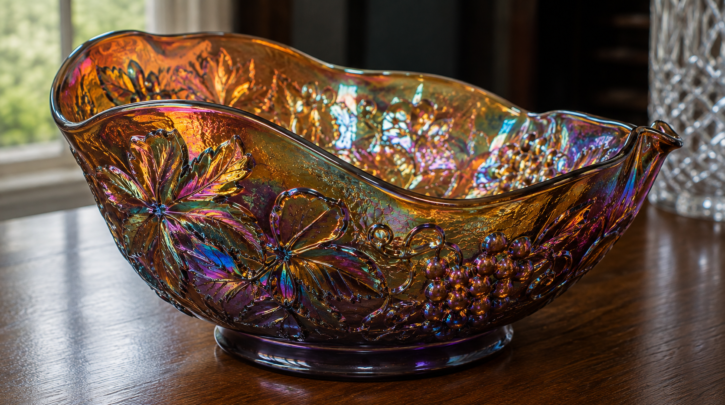
Carnival glass is pressed glass finished with an iridescent, metallic surface coating that shimmers with shifting rainbow color — and despite the name, it wasn’t originally made as carnival prize glass at all, which is one of the more interesting quirks of how this category…
 Written by: Vintage Glass Guide Editorial Team
Posted on: July 9, 2026
Written by: Vintage Glass Guide Editorial Team
Posted on: July 9, 2026
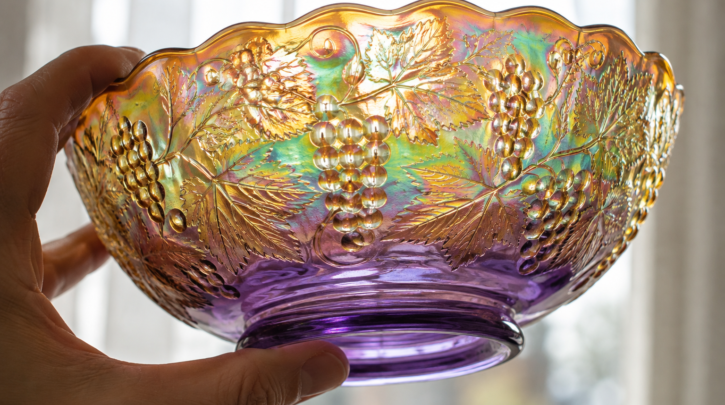
Carnival Glass Colors: Base Color vs. Iridescence Explained
The single most important thing to understand about carnival glass color is that there are two separate things going on: the iridescent surface finish that shimmers and shifts, and the base color of the glass underneath it — and it’s the base color, not the…
 Written by: Vintage Glass Guide Editorial Team
Posted on: July 9, 2026
Written by: Vintage Glass Guide Editorial Team
Posted on: July 9, 2026
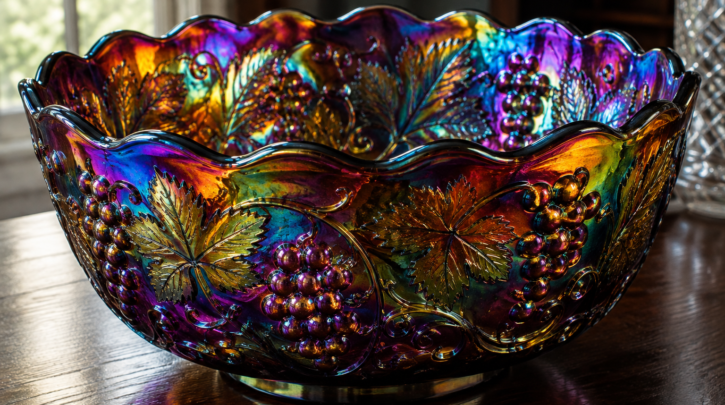
Carnival Glass Makers: The Big Four and Beyond
Four American glass companies — Fenton, Northwood, Imperial, and Millersburg — are collectively known among collectors as the “Big Four,” and together they account for the large majority of classic-era carnival glass that collectors actively pursue today. Fenton Art Glass Founded in 1905, Fenton is…
 Written by: Vintage Glass Guide Editorial Team
Posted on: July 9, 2026
Written by: Vintage Glass Guide Editorial Team
Posted on: July 9, 2026
Most Valuable Carnival Glass: What Drives Price
Most carnival glass, particularly common marigold pieces in well-known patterns, remains genuinely affordable — real value concentrates in a smaller set of rare base colors, scarce makers, unusual patterns, and one-of-a-kind experimental shapes. Base Color Is the Biggest Single Factor As covered in our colors…