
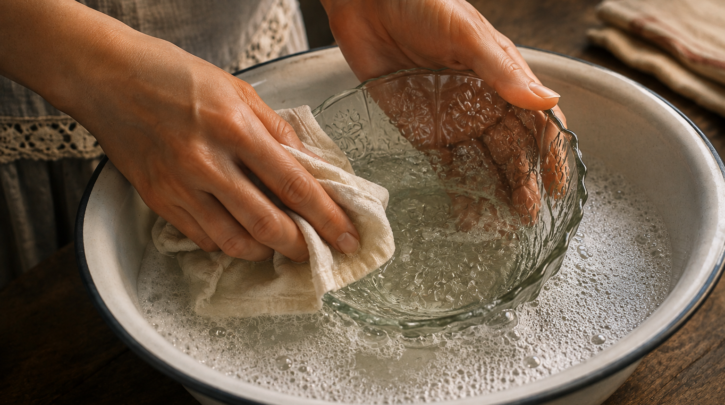

Cleaning antique glass safely comes down to a small set of principles that apply consistently no matter which category you’re working with — gentle hand cleaning, avoiding sudden temperature changes, and understanding that some cloudiness simply can’t be reversed at home.
The Universal Rule: Hand Wash Only
Warm, not hot, water with a mild dish soap and a soft cloth or sponge handles routine cleaning for essentially every category on this site; see our Depression glass cleaning guide for the full reasoning behind why this simple routine avoids nearly every common cause of damage.
Why the Dishwasher Is Always a Bad Idea
Heat, harsh detergent, water pressure, and physical agitation against other items combine to make dishwashers one of the fastest ways to damage antique glass across every category — chips, cracks, and clouding are all common outcomes, and none of them are worth the convenience of skipping a quick hand wash.
Thermal Shock Applies Universally
Sudden temperature changes can crack glass that shows no other sign of weakness, regardless of category or age — letting a piece come closer to room temperature before washing, and avoiding sudden hot-to-cold or cold-to-hot transitions, protects everything from Depression glass to Fire-King restaurant ware equally.
Category-Specific Care Considerations
A few categories need extra care beyond the general routine. Carnival glass’s iridescent surface finish is a coating that can wear with harsh scrubbing, so gentle handling matters more than for plain glass; see our carnival glass value guide for how finish condition affects worth. Milk glass and Jadeite show chips starkly against their opaque white or pale surface, making careful handling especially important. Fenton pieces with crimped or ruffled edges, like Silver Crest, are particularly prone to edge damage and deserve extra-gentle handling; see our Fenton value guide for why this matters so much for that specific line.
Understanding ‘Sick Glass’
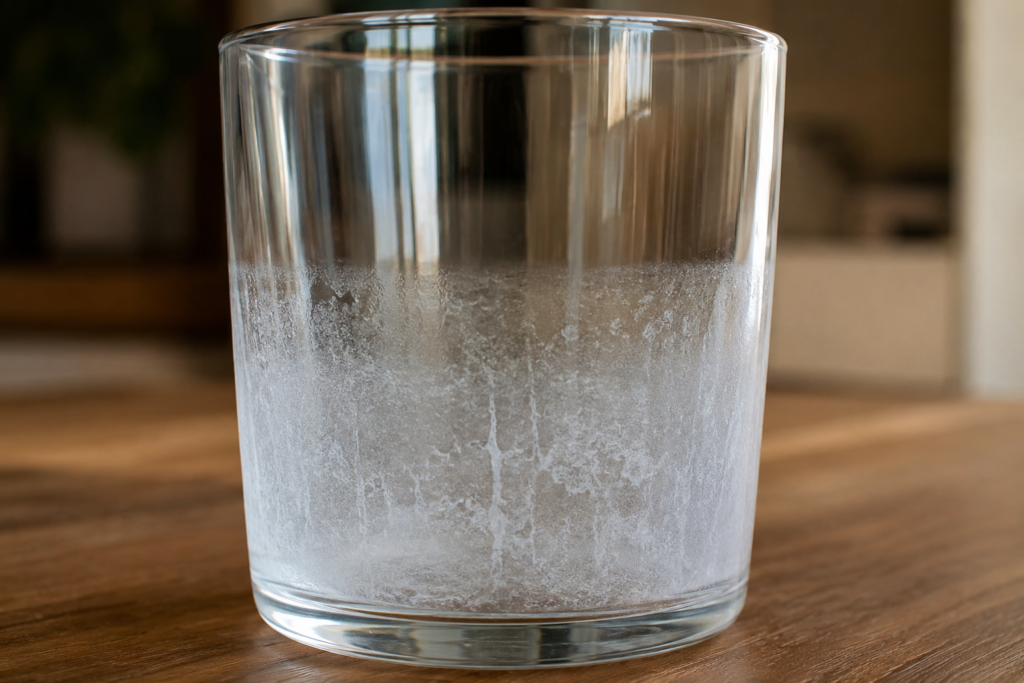
Cloudiness in old glass, often caused by mineral deposits etching into the surface over years of hard-water exposure, is genuinely different from surface dirt — it’s microscopic damage to the glass itself, which means it often can’t be fully reversed with home cleaning methods no matter how hard you scrub; see our Depression glass cleaning guide for a fuller explanation of why this happens and what professional options exist.
Storage Principles Across Every Category
- Pad stacked pieces to prevent direct glass-on-glass contact
- Keep colored glass out of prolonged direct sunlight to prevent gradual fading
- Store on stable shelving away from vibration
- Avoid leaving standing water in vases or covered dishes
- Handle fragile edges and decorative trim with extra care during cleaning and storage alike
When to Call a Professional
For genuinely valuable or historically significant pieces, particularly ones showing sick glass or a suspected repair, a professional glass conservator is worth consulting before attempting any cleaning or restoration beyond routine hand washing — the cost of professional care is almost always smaller than the risk of permanently damaging a piece worth real money.
Cleaning Newly Acquired Pieces
A piece freshly brought home from an estate sale or antique mall often just needs a straightforward hand wash to remove years of dust and general grime — resist scrubbing hard at anything that doesn’t come off easily, since it may be sick glass etching rather than surface dirt, and aggressive scrubbing risks scratching the surface without actually removing anything.
A Routine Worth Building Into a Habit
For pieces in regular display or occasional use, infrequent gentle dusting plus an occasional hand wash keeps antique glass looking good indefinitely across every category on this site — consistent, gentle care over years and decades matters far more than any single intensive cleaning session.
Cleaning Before Selling or Appraisal
A gentle clean before photographing a piece for sale or bringing it to an appraiser genuinely helps — dust and grime can obscure details that matter for accurate identification and valuation — but resist the urge to over-clean or attempt to fix condition issues yourself right before a sale, since inexpert intervention can sometimes reduce value more than the original flaw did; see our appraisal guide for how to prepare a piece properly before a professional evaluation.
A clean, well-presented piece simply makes a better first impression, whether that’s to a potential buyer or a professional appraiser.