
 Written by: Vintage Glass Guide Editorial Team
Posted on: July 9, 2026
Written by: Vintage Glass Guide Editorial Team
Posted on: July 9, 2026
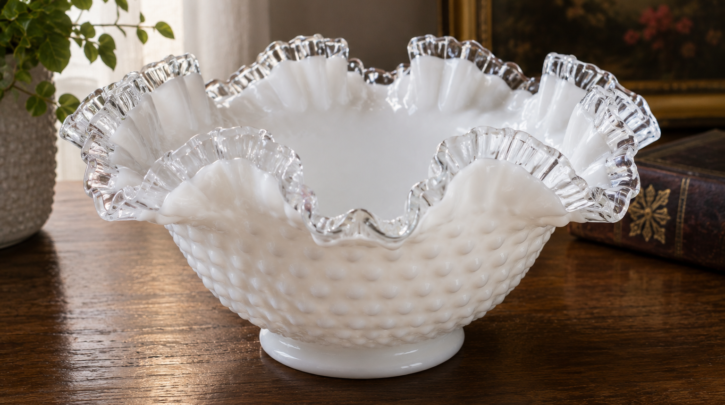
Fenton Glass Colors and Patterns Beyond Hobnail
Hobnail may be the pattern most associated with Fenton in the popular imagination, but the company’s signature art glass lines — Burmese, opalescent glass, custard glass, slag glass, and Rosalene among them — represent some of its most historically significant and collector-prized work. Burmese Glass…
 Written by: Vintage Glass Guide Editorial Team
Posted on: July 9, 2026
Written by: Vintage Glass Guide Editorial Team
Posted on: July 9, 2026
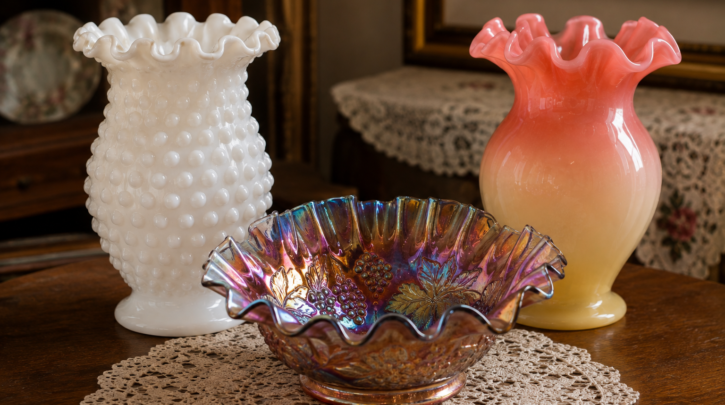
Fenton Glass Value Guide: What Actually Drives Price
Fenton produced glass for more than a century across an enormous range of patterns and colors, which means the vast majority of pieces in circulation today are common and genuinely affordable — real value concentrates in specific signature lines, rarer colors, and pieces in excellent…
 Written by: Vintage Glass Guide Editorial Team
Posted on: July 9, 2026
Written by: Vintage Glass Guide Editorial Team
Posted on: July 9, 2026
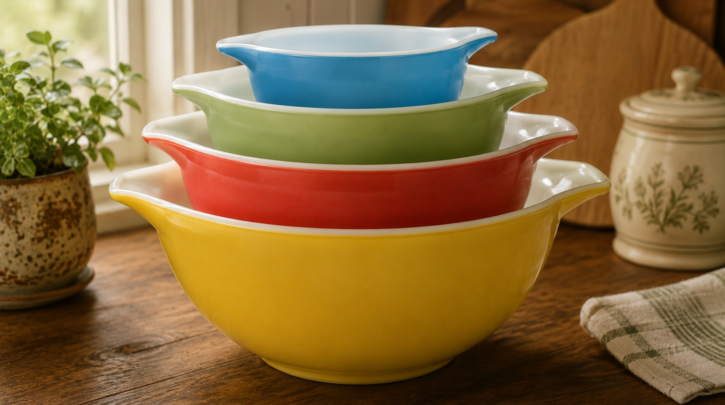
Vintage Pyrex Collecting: A Complete Guide
“Vintage Pyrex” among collectors doesn’t mean just any old glass kitchenware — it specifically refers to the colored, patterned opal glass mixing bowls and casserole dishes Corning Glass Works produced roughly from the mid-1940s through the 1970s, and it’s currently one of the most actively…
 Written by: Vintage Glass Guide Editorial Team
Posted on: July 9, 2026
Written by: Vintage Glass Guide Editorial Team
Posted on: July 9, 2026
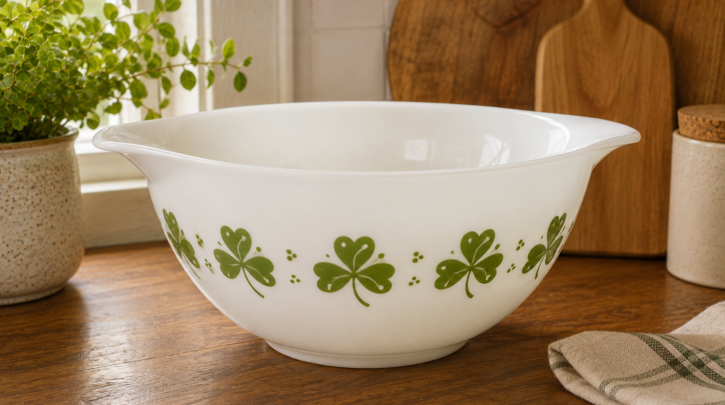
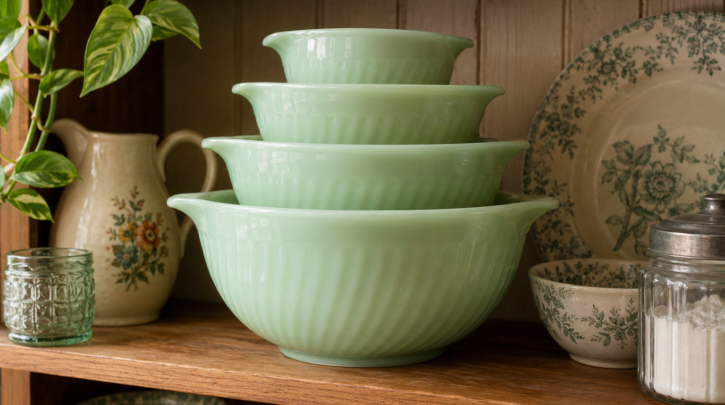
Vintage Pyrex Patterns: From Primary Colors to the Rarest Finds
Vintage Pyrex patterns range from genuinely common, widely available designs still easy to find at a reasonable price, to a handful of extraordinarily rare test patterns that command serious money whenever a genuine example surfaces. Primary Colors The nesting mixing bowl set in yellow, red,…
 Written by: Vintage Glass Guide Editorial Team
Posted on: July 9, 2026
Written by: Vintage Glass Guide Editorial Team
Posted on: July 9, 2026
Vintage Fire-King Jadeite: A Collecting Guide
Fire-King Jadeite — a pale, opaque green glass made by Anchor Hocking, not Corning — is one of the most recognizable and actively collected vintage American kitchenware colors, with a revival story that’s genuinely tied to a specific, well-documented moment in popular culture. What Fire-King…
 Written by: Vintage Glass Guide Editorial Team
Posted on: July 9, 2026
Written by: Vintage Glass Guide Editorial Team
Posted on: July 9, 2026
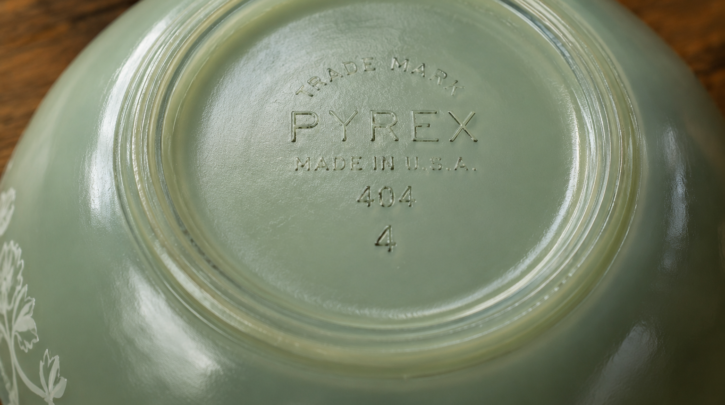
How to Date Vintage Pyrex: Marks, Numbers, and Spotting Fakes
Dating a piece of vintage Pyrex comes down to reading the bottom of the piece carefully — the maker’s mark, embossed size numbers, and pattern all combine to narrow down when and as what it was originally sold, which matters more than ever given how…
 Written by: Vintage Glass Guide Editorial Team
Posted on: July 9, 2026
Written by: Vintage Glass Guide Editorial Team
Posted on: July 9, 2026
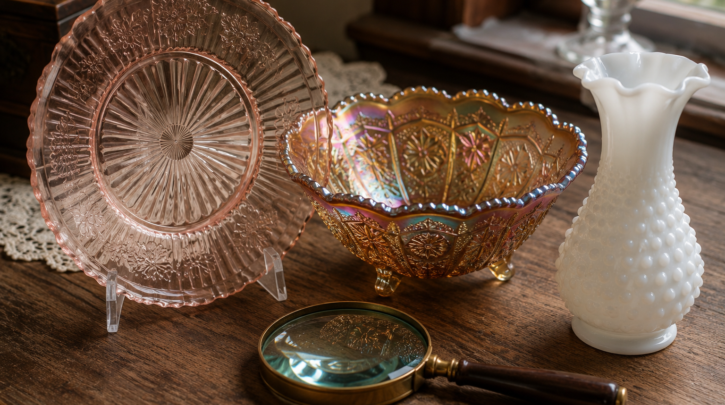
How to Identify Antique Glass: A General Framework
Every category on this site — Depression glass, carnival glass, milk glass, Fenton, vintage kitchen glass — gets identified using essentially the same underlying framework, even though the specific patterns, colors, and makers differ completely. Understanding that shared framework is what actually transfers when you…
 Written by: Vintage Glass Guide Editorial Team
Posted on: July 9, 2026
Written by: Vintage Glass Guide Editorial Team
Posted on: July 9, 2026
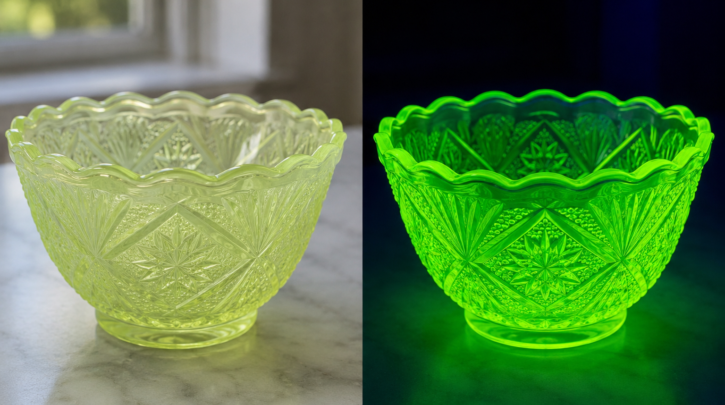
Uranium and Vaseline Glass: The Glass That Glows
Uranium glass is exactly what it sounds like — glass made with actual uranium oxide added to the batch as a colorant, historically produced from the 1830s through the mid-20th century, and it’s one of the most genuinely fun categories in antique glass collecting thanks…
 Written by: Vintage Glass Guide Editorial Team
Posted on: July 9, 2026
Written by: Vintage Glass Guide Editorial Team
Posted on: July 9, 2026
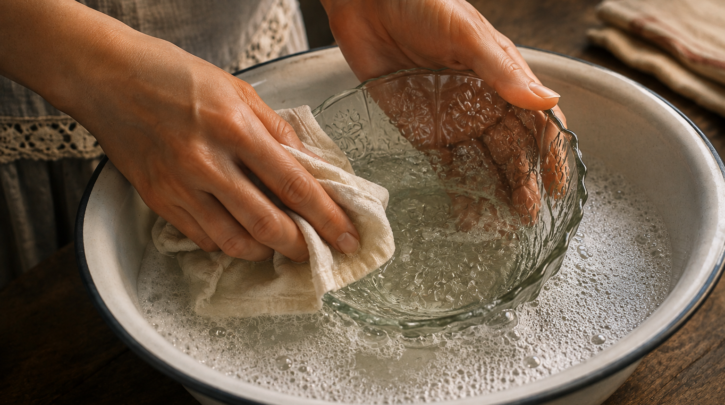
How to Clean Antique Glass Safely: A General Guide
Cleaning antique glass safely comes down to a small set of principles that apply consistently no matter which category you’re working with — gentle hand cleaning, avoiding sudden temperature changes, and understanding that some cloudiness simply can’t be reversed at home. The Universal Rule: Hand…
 Written by: Vintage Glass Guide Editorial Team
Posted on: July 9, 2026
Written by: Vintage Glass Guide Editorial Team
Posted on: July 9, 2026
Antique Glass vs. Reproduction: A General Detection Framework
Every collectible glass category on this site has some level of reproduction or reissue activity, and while the specific patterns differ, the underlying detection principles are remarkably consistent — which means learning them once genuinely pays off across every category you might collect. Why Reproductions…