
Dating a piece of vintage Pyrex comes down to reading the bottom of the piece carefully — the maker’s mark, embossed size numbers, and pattern all combine to narrow down when and as what it was originally sold, which matters more than ever given how much money rides on correctly identifying a genuinely rare pattern.
The Bottom Marking
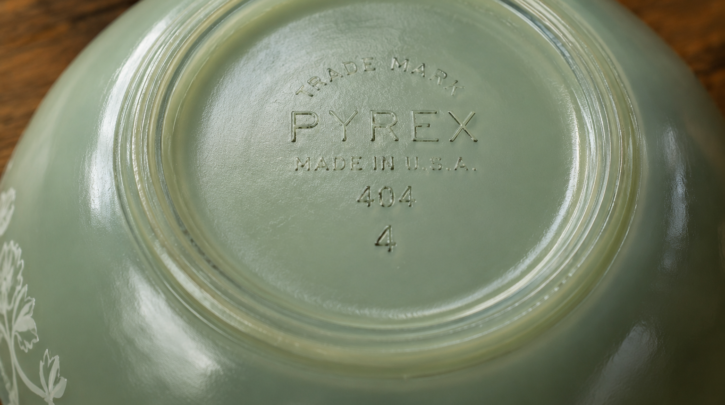
Most vintage Pyrex pieces carry a “Pyrex” mark embossed into the glass on the bottom, and the exact style of this mark changed over the decades of production. Rather than memorizing every specific design variation, the practical takeaway is that a genuine, period-appropriate mark is one data point among several worth checking, alongside pattern and color, rather than a single definitive test on its own.
Size and Shape Numbers
Alongside the maker’s mark, most pieces carry an embossed size or shape number — the Primary Colors nesting bowl set, for example, uses numbers 401 through 404 to identify each size in the set. These numbers are genuinely useful for confirming exactly which piece from a set you’re looking at and cross-referencing against collector references that document which numbers belong to which sets and patterns.
Cross-Referencing Pattern to Production Era
Because most patterns were tied to a specific, reasonably well-documented production window, confirming a pattern name against a reliable collector reference narrows down an approximate era even without more precise dating information; see our patterns guide for the patterns most worth learning to recognize by sight.
Spotting Altered or Faked Rare Patterns
Because a handful of ultra-rare patterns command such large sums, some sellers alter common, inexpensive bowls to mimic a rare design — painting or applying decals on top of the glass rather than the pattern being part of the original fired glaze. Genuine Pyrex patterns were fired into the glass during manufacturing, giving them a smooth, integrated surface texture, while an applied fake pattern often shows a slightly raised, textured, or inconsistent surface under close inspection, sometimes with color that looks subtly too bright or too flat compared to documented originals.
Checking Color Saturation and Placement
Beyond surface texture, comparing a suspicious piece’s exact color tone and pattern placement against verified photos of the genuine pattern catches many altered pieces, since replicating an original factory pattern precisely by hand is genuinely difficult — small inconsistencies in spacing, color, or design proportion are common tells once you know to look closely.
When a ‘Rare Find’ Seems Too Good to Be True
Any Pyrex piece offered at a price suggesting one of the genuinely rare test patterns deserves serious scrutiny before purchase — researching the seller, requesting close-up photos of the surface texture, and, for a significant purchase, getting a second opinion from an experienced collector or specialist before paying; see our appraisal guide for how professional verification works for a high-value claimed find.
Building Confidence Over Time
As with every category on this site, handling genuine, well-documented pieces regularly builds an instinct for surface texture and color that’s difficult to fully convey in writing — treat this guide as a starting framework rather than a substitute for direct experience with real pieces.
Why This Extra Caution Is Worth It
Given how much the rarest confirmed patterns can be worth, the extra time spent verifying a suspicious piece before paying a premium price is genuinely trivial compared to the cost of being wrong — a careful, skeptical approach protects both new collectors learning the hobby and experienced ones who should still know better than to skip verification on an exciting find.
A Simple Verification Checklist
- Check the bottom marking style against the claimed era
- Confirm the embossed size number matches the claimed pattern and set
- Inspect surface texture closely for signs of an applied rather than fired pattern
- Compare color saturation and pattern placement against verified reference photos
- Get a second opinion before paying a price that assumes a rare pattern is genuine
Working Through the Checklist in Practice
None of these individual checks is foolproof on its own, but running through all five together on a piece claiming rare-pattern status catches the overwhelming majority of altered or misidentified pieces before any money changes hands — exactly the kind of layered verification approach that serves collectors well across every category covered on this site.
Slowing down for these checks costs a few minutes and can save hundreds or thousands of dollars on the wrong purchase.