
“Vintage Pyrex” among collectors doesn’t mean just any old glass kitchenware — it specifically refers to the colored, patterned opal glass mixing bowls and casserole dishes Corning Glass Works produced roughly from the mid-1940s through the 1970s, and it’s currently one of the most actively collected categories in vintage American kitchenware.
Three Different ‘Pyrex’ Products
Corning originally launched Pyrex around 1915 as clear, heat-resistant borosilicate glass for bakeware and lab use. In the 1940s, Corning added colored, opaque bakeware using a different glass formula under the same brand name, and this colored, patterned line is what “vintage Pyrex” collecting is actually about. Modern Pyrex, sold since Corning licensed the consumer brand out in 1998, is a separate matter entirely, often made with different glass and different ownership — worth knowing before you assume anything labeled Pyrex on a store shelf today connects to the collectible vintage pieces.
The Iconic Mixing Bowl Sets
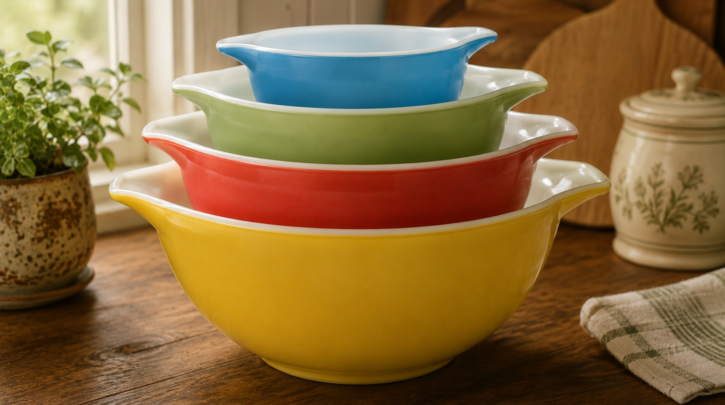
The Primary Colors nesting mixing bowl set — yellow, red, green, and blue bowls in graduated sizes — is probably the single most recognized piece of vintage Pyrex, and it’s a genuinely good entry point for a new collector since sets are relatively plentiful and widely documented; see our patterns guide for this and the many other patterns Corning produced.
Why the Hobby Has Grown So Much
Vintage Pyrex sits in a genuinely unusual spot for a collectible: pieces are still fully functional bakeware, which means collectors can display and actually use what they collect, unlike many purely decorative antiques. That practical appeal, combined with strong social media and thrift-flipping culture, has driven real growth in both collector interest and prices over the past decade or two.
Basic Identification
Identification starts with recognizing the pattern by name, then checking color and, on the bottom of most pieces, embossed markings and size numbers that help confirm exactly which piece and set you’re looking at; see our dating guide for how to read those markings and narrow down a production era.
The Reproduction and Scam Problem
Because a small number of extremely rare patterns command genuinely large sums, some bad-faith sellers have altered common, inexpensive bowls — painting or applying decals to mimic a rare pattern — specifically to scam buyers chasing a big find; see our dating guide for the specific signs that separate an altered piece from a genuine factory pattern.
A Related but Separate Brand
Fire-King, made by Anchor Hocking rather than Corning, is a different brand entirely but occupies similar collecting territory — heat-resistant, colorful vintage kitchenware, most famously the pale green Jadeite color; see our Fire-King Jadeite guide for how that brand and its most iconic color fit alongside Pyrex collecting.
Starting a Collection
A reasonable starting point is picking one or two patterns that genuinely appeal to you and building out from there, rather than trying to collect broadly across dozens of patterns at once — both because focus builds real identification expertise faster, and because many vintage Pyrex sets were designed to be displayed and used together, which is part of the appeal in the first place.
Using What You Collect
Because vintage Pyrex remains genuinely functional bakeware, many collectors do use their pieces for actual cooking and baking rather than keeping everything purely for display — though it’s worth noting that heavy use accelerates wear and reduces long-term value on pieces that might otherwise be worth preserving for resale, so it’s a personal call depending on whether a given piece is a keeper or something you’d consider selling later.
Where Vintage Pyrex Turns Up
Thrift stores, estate sales, and inherited kitchen collections are the most common sources, and vintage Pyrex specifically shows up in general thrift circulation more often than some other collectible glass categories, since it was genuinely everyday kitchenware in millions of American households rather than a purely decorative purchase; see our buying guide for what to expect across different sourcing options.
Connecting With the Broader Collector Community
Vintage Pyrex has an especially active online collector community compared to some other categories on this site, with dedicated groups and forums where members regularly help identify uncertain pieces and share documented pattern references — a genuinely valuable resource for a hobby where correctly verifying a rare find can matter a great deal financially.
Joining those conversations, even just to read and learn at first, shortcuts a lot of the trial and error a new collector would otherwise face alone.