
More than 100 distinct Depression glass patterns were produced across all manufacturers, but a much smaller core group accounts for the large majority of collector interest, reproduction activity, and resale value. Learning these first gives you a real foundation before branching into rarer, less-documented patterns.
Cherry Blossom
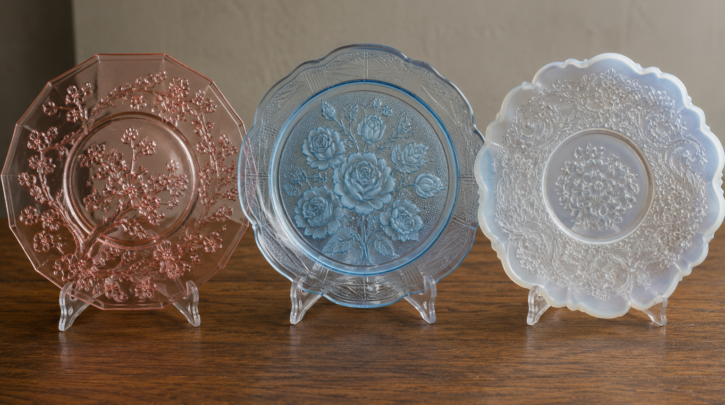
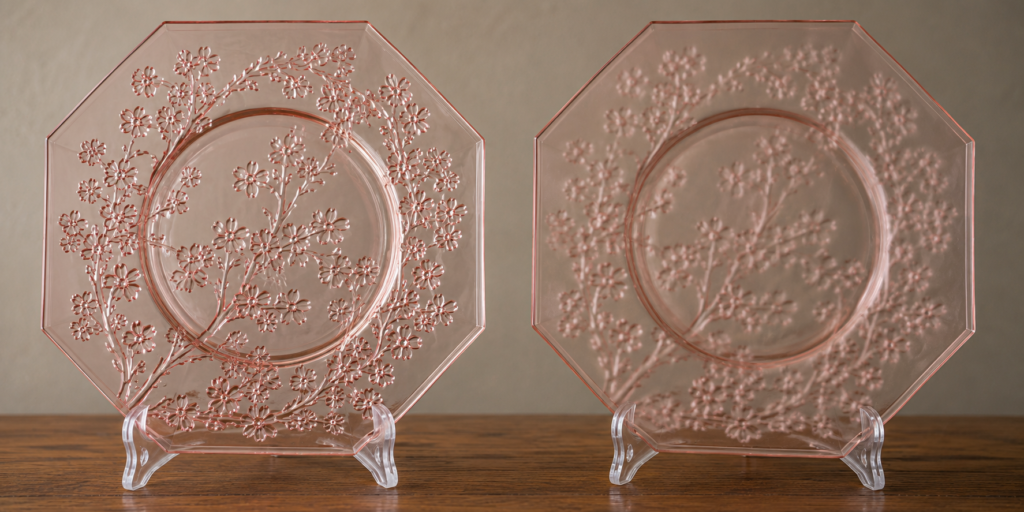
Made by Jeannette Glass, Cherry Blossom features a branch-and-blossom motif and is one of the most popular — and most heavily reproduced — patterns in the entire category, produced mainly in pink and green with rarer pieces in other colors; see our reproductions guide for what to watch for specifically with this pattern.
Mayfair (Open Rose)
Hocking Glass’s Mayfair pattern, nicknamed Open Rose for its floral design, was produced in pink, blue, green, and yellow, with certain shapes and colors — particularly blue and yellow cookie jars — commanding significantly more than typical pieces. Mayfair is another pattern with a well-documented reproduction history worth researching before a serious purchase.
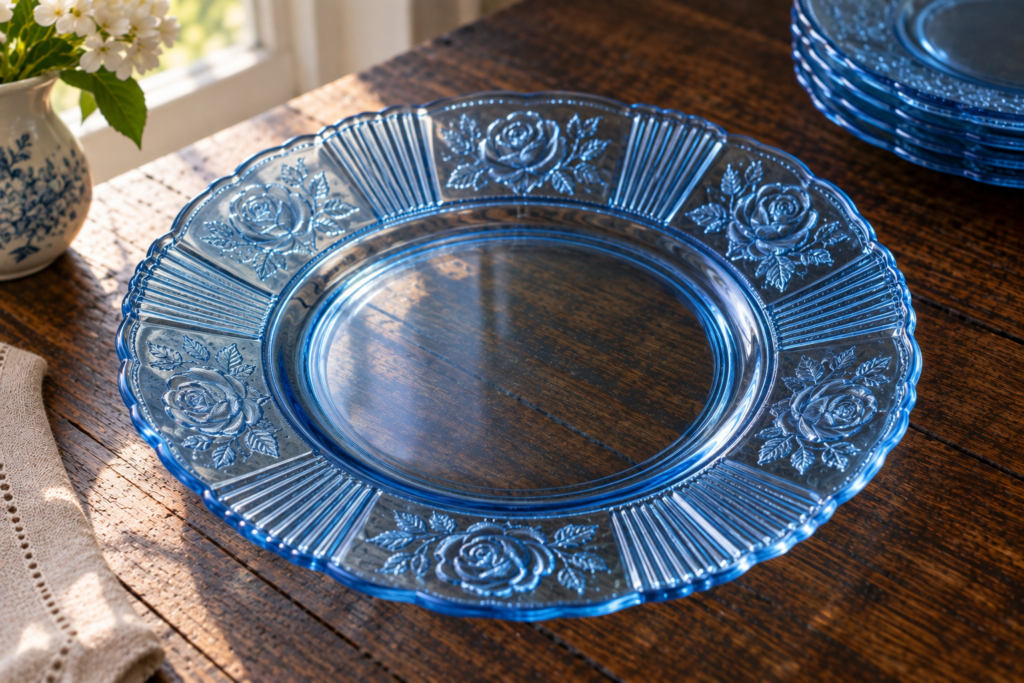
American Sweetheart
MacBeth-Evans produced American Sweetheart with a delicate, scalloped floral-and-scroll design, notably including Monax, an opalescent white that’s essentially the signature color for this pattern alongside pink and a rarer, deeper red-orange.
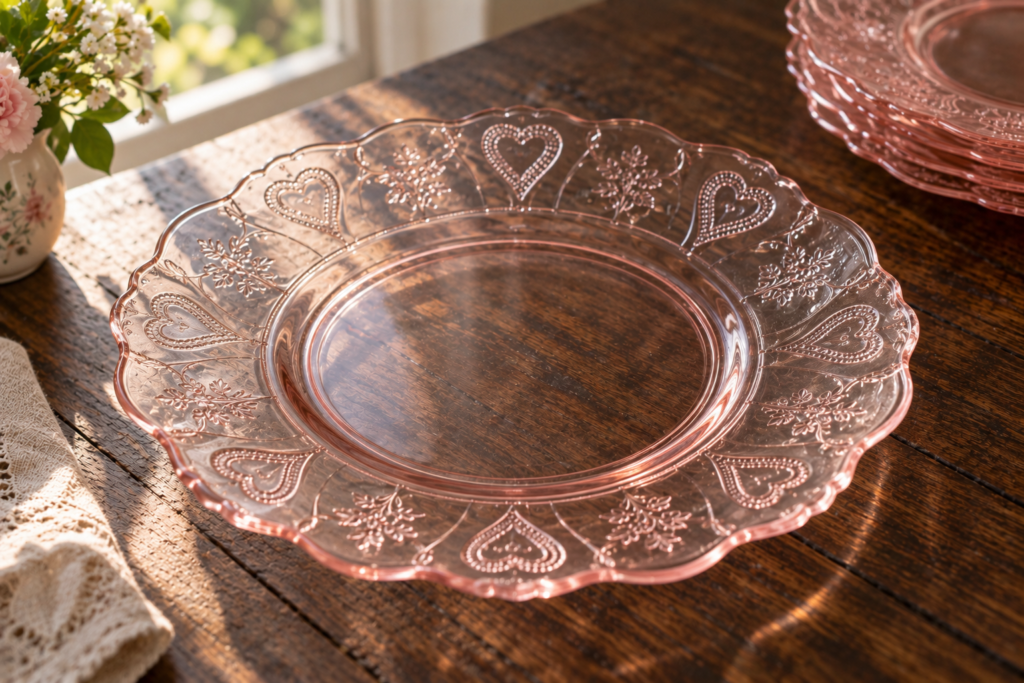
Royal Lace
Hazel-Atlas’s Royal Lace pattern shows an intricate, lace-like scrolling design and was produced in pink, green, crystal, and a notably desirable cobalt blue, with cobalt pieces generally commanding the highest prices within the pattern.
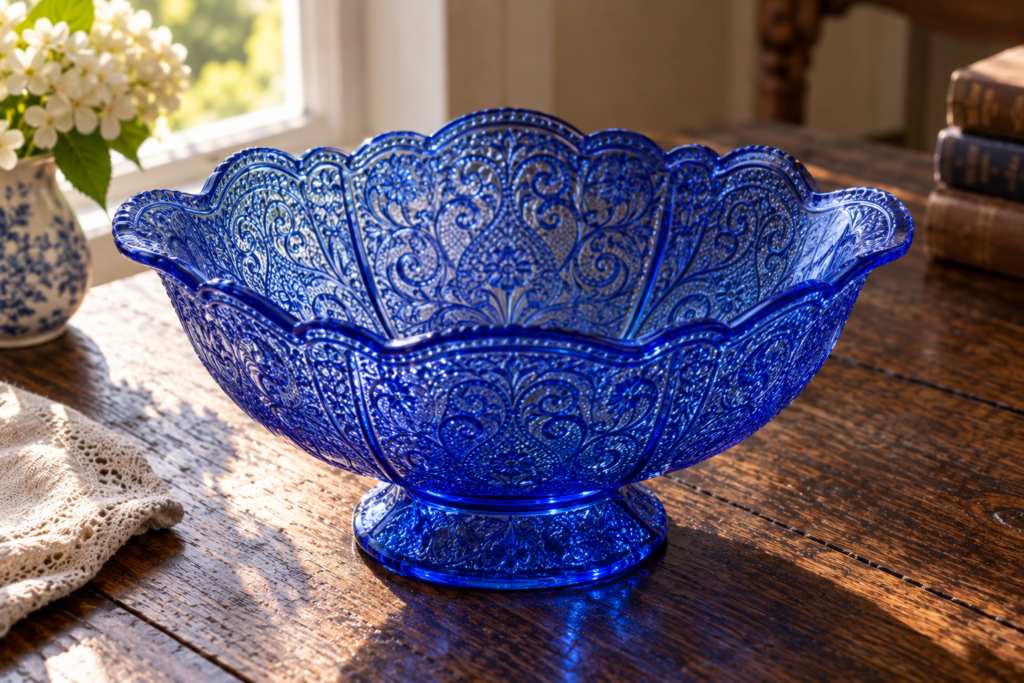
Princess
Hocking’s Princess pattern uses a geometric, faceted design produced mainly in pink, green, topaz, and blue, and it’s known for a particularly wide range of shapes and serving pieces, which gives collectors a lot to pursue within a single pattern.
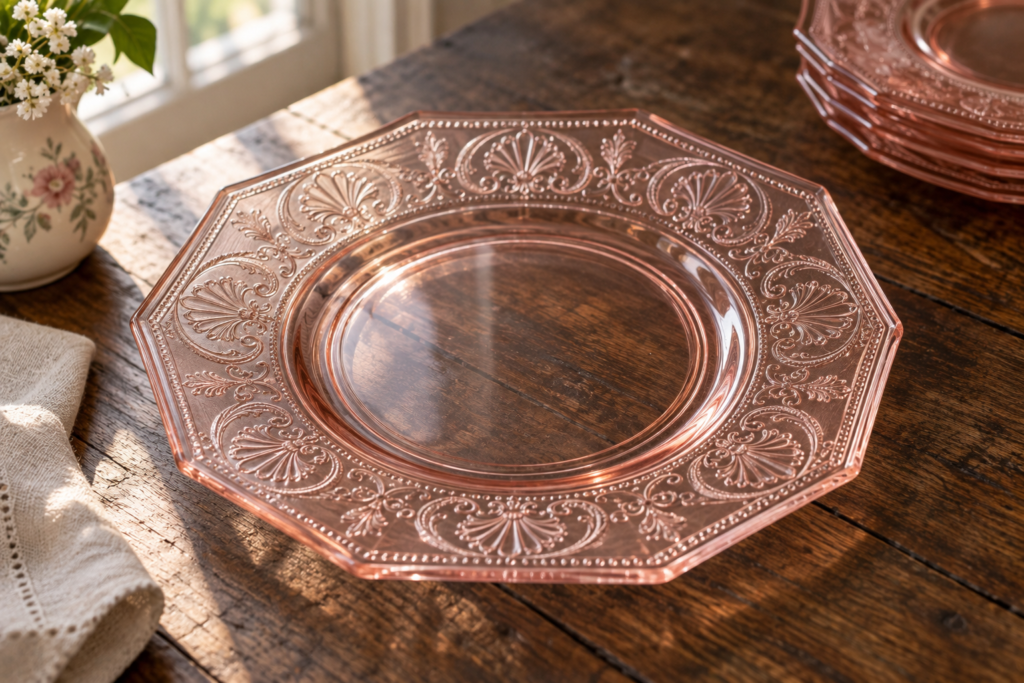
Miss America
Hocking’s Miss America shows a bold, sunburst-like geometric pattern with diamond-shaped facets, produced mostly in pink and crystal, with rarer colors like green, ice blue, and red commanding real premiums over the common colors.
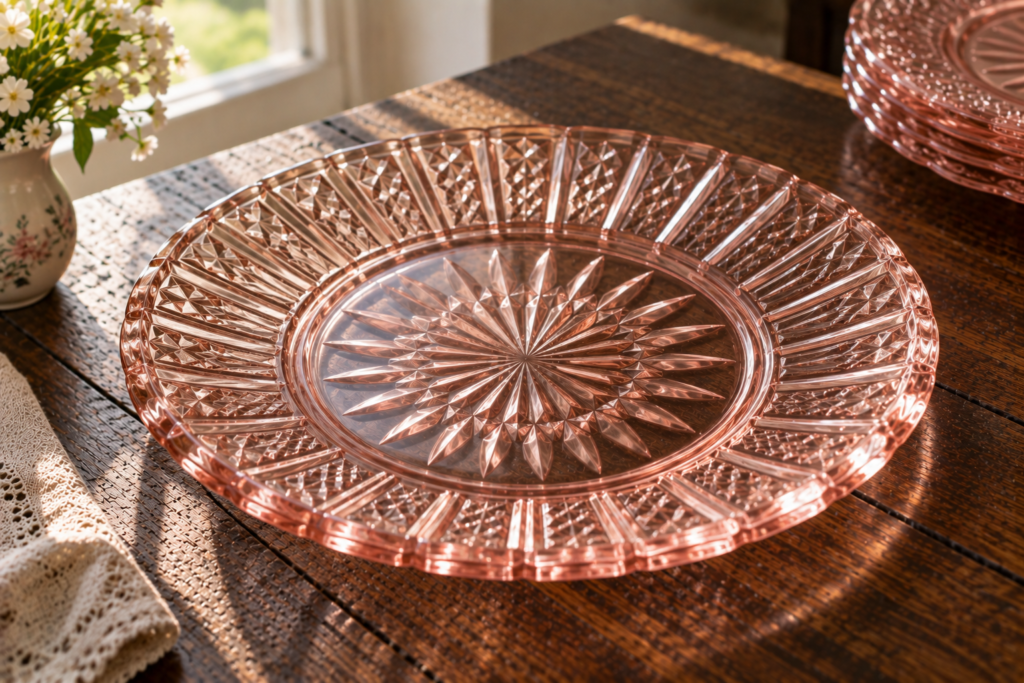
Sharon (Cabbage Rose)
Federal Glass’s Sharon pattern, nicknamed Cabbage Rose, features a rounded floral motif and was produced in pink, green, and amber — and it’s another pattern with a documented reproduction history, particularly in certain serving pieces.
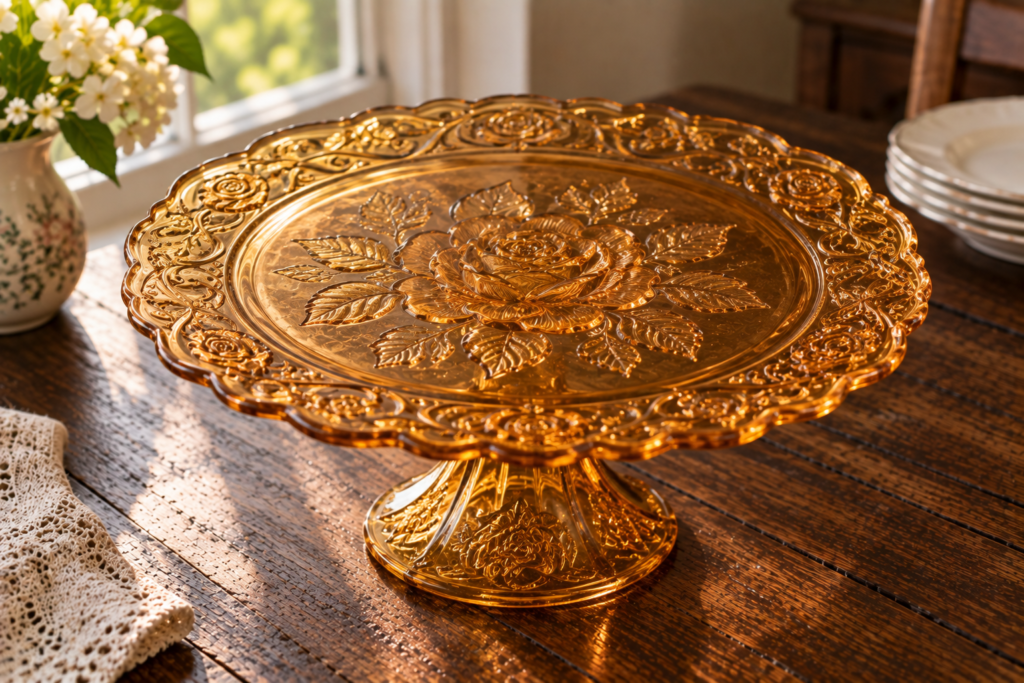
Windsor
Jeannette’s Windsor pattern uses a diamond-and-button motif reminiscent of older pressed glass styles, produced mainly in pink, green, and crystal, with a notably wide range of shapes including several less-common serving forms.
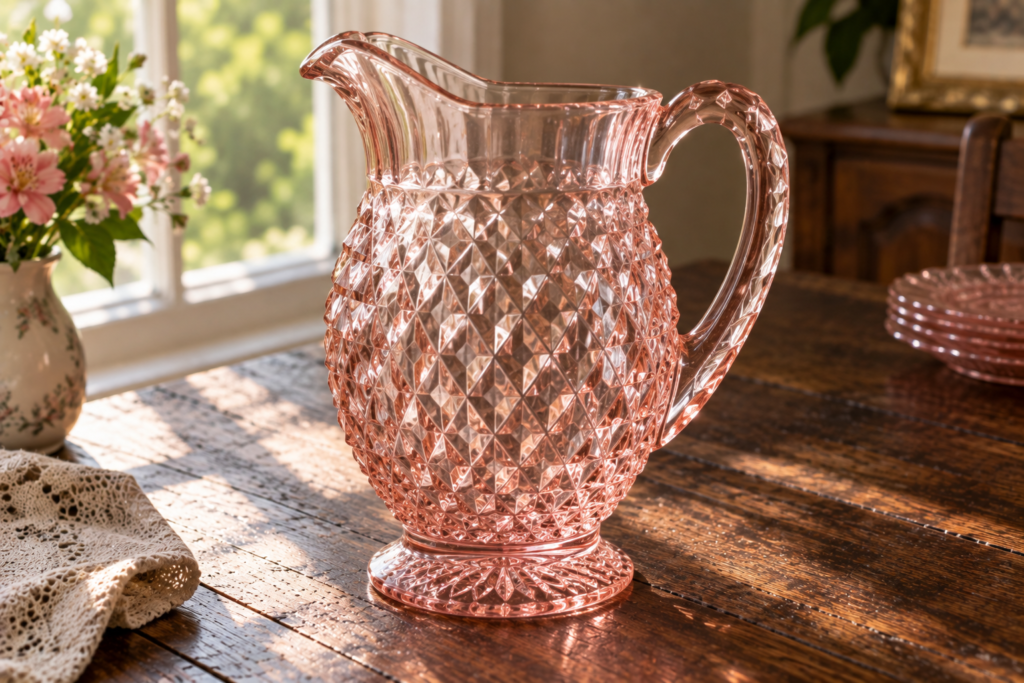
Madrid
Federal Glass’s Madrid pattern, with a scrolling floral-and-basket design, was produced in amber, green, pink, and crystal — and it was directly reissued by Indiana Glass in 1976 as a bicentennial line called Recollection, which adds a genuine layer of identification complexity; see our reproductions guide for how to tell original Madrid from the Recollection reissue.
A Quick Reference Table
| Pattern | Maker | Common Colors |
|---|---|---|
| Cherry Blossom | Jeannette Glass | Pink, green |
| Mayfair (Open Rose) | Hocking Glass | Pink, blue, green, yellow |
| American Sweetheart | MacBeth-Evans | Monax, pink |
| Royal Lace | Hazel-Atlas | Pink, green, cobalt blue |
| Princess | Hocking Glass | Pink, green, topaz |
| Miss America | Hocking Glass | Pink, crystal |
| Sharon (Cabbage Rose) | Federal Glass | Pink, green, amber |
| Windsor | Jeannette Glass | Pink, green, crystal |
| Madrid | Federal Glass | Amber, green, pink, crystal |
Beyond the Core Patterns
Once these patterns feel familiar, dozens of less common ones — Iris and Herringbone, Doric, Floral, Cameo, and many more — offer real depth for a collector ready to go further; see our identification guide for the general skills that transfer to any pattern you come across.
How Pattern Names Came to Be
Almost none of these names — Cherry Blossom, Cabbage Rose, Open Rose — were used by the original manufacturers, who typically marketed patterns with simple numbers or generic names, if they marketed the pattern by name at all. Collector clubs and early price-guide authors assigned the descriptive names still used today, largely based on the pattern’s visual motif, which is why the names are so consistently evocative and easy to picture even before you’ve seen the glass itself.
Why Some Patterns Cross Manufacturers in Look
Because multiple companies competed in the same low-cost mass-market space at the same time, some patterns from different makers share a broadly similar visual language — floral motifs, ribbed borders, scalloped edges — without being the same pattern at all. This is exactly why confirming the maker, not just recognizing a general style, matters for accurate identification rather than assuming any floral pink glass must be one specific well-known pattern.
Confirming maker alongside pattern is a small extra step that pays off every time it prevents a costly misidentification.