
Most Depression glass is genuinely inexpensive — common pieces in common patterns and colors often sell for single-digit to low double-digit dollar amounts. Real value concentrates in a much smaller set of rare shapes, uncommon colors, and well-preserved pieces, and understanding what actually drives that value matters more than assuming anything old is automatically valuable.
Rarity of Shape
Within any pattern, certain shapes were produced in far smaller quantities than basic plates and cups — child-size pieces, specific serving forms, and shapes discontinued early in a pattern’s production run are consistently the most valuable within that pattern, regardless of color.
Rare Colors Within a Pattern
As covered in our colors guide, cobalt blue and other limited-production colors within a pattern typically sell for meaningfully more than the same shape in a common color like pink or green, sometimes by a large multiple.
Condition Matters Enormously
Chips, cracks, cloudiness (often called “sick glass”), and even significant wear on the pattern’s raised detail all reduce value substantially, and serious collectors generally won’t pay full price for anything short of excellent condition. A rare piece with damage can actually be worth less than a common piece in pristine condition; see our cleaning guide for how to care for pieces without accidentally causing this kind of damage.
Complete Sets vs. Individual Pieces
Because original sets have been broken up and scattered over nearly a century, a complete or near-complete set in a single pattern and color is worth considerably more than the sum of its individual pieces sold separately, which is part of why some collectors specifically hunt for pieces to complete a set they already own rather than buying at random.
Well-Known High-Value Examples
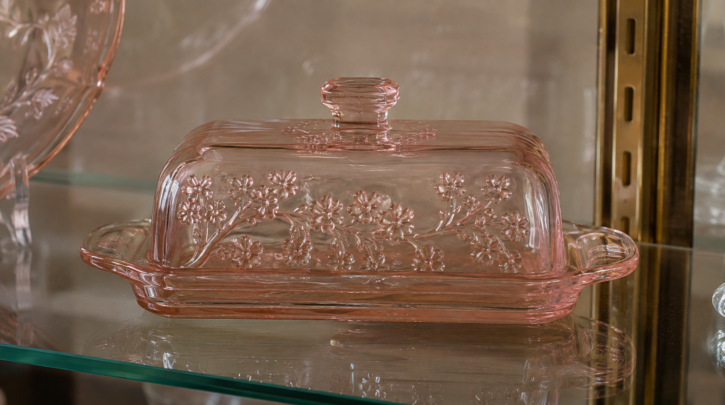
Certain specific pieces have become well known among collectors for commanding especially high prices — Cherry Blossom’s child-size butter dish is a frequently cited example, along with certain cobalt Royal Lace pieces and specific cookie jars in Mayfair’s rarer colors. These examples are worth knowing, but exact prices shift considerably with market conditions and collector demand over time, so treat any specific dollar figure as a rough starting point rather than a fixed number.
Market Trends Are Real and Worth Acknowledging
Depression glass values aren’t static, and being honest about this matters: as the generation that originally collected this glassware ages, some segments of the market have softened even for pieces that were considered genuinely valuable decades ago, while other patterns and colors have seen renewed interest from newer collectors. Checking recent actual sale prices rather than relying on an old price guide gives a far more accurate picture of current value.
Checking Current Prices
Searching completed and sold listings, not just active asking prices, gives the most realistic sense of what a specific piece is actually selling for right now.
Check current Depression glass listings and completed sales Search Depression glass on eBay
Getting a Professional Opinion
For a piece that seems genuinely rare or valuable, a professional appraisal or consultation with a specialist dealer is worth the cost before selling or insuring it; see our appraisal guide for how that process works and when it’s worth pursuing.
Value Isn’t Only About Selling
Knowing a realistic value matters even if you have no plans to sell — for insurance purposes, for deciding how carefully to store and display a piece, and simply for understanding what you actually own when a set has been passed down through a family without any record of what it’s worth.
A Reasonable Starting Approach
For anyone assessing a collection for the first time, start by identifying pattern and color for each piece, note visible condition issues, then check recent completed sale prices for comparable pieces before assuming either that everything is worthless or that everything is a hidden fortune — the reality for most collections sits somewhere in between, with a few standout pieces and a larger number of modestly valued ones.
That balanced approach protects against both under-selling a genuine rarity and over-insuring a box of common pieces.
Documenting What You Find
Photographing each piece alongside brief notes on pattern, color, and any visible damage, kept together with whatever price research you’ve done, creates a useful record whether you eventually sell, insure, or simply want to remember what you have. This kind of documentation also makes any future appraisal conversation faster, since a specialist can work from organized information rather than starting from scratch.