
Hobnail may be the pattern most associated with Fenton in the popular imagination, but the company’s signature art glass lines — Burmese, opalescent glass, custard glass, slag glass, and Rosalene among them — represent some of its most historically significant and collector-prized work.
Burmese Glass
Burmese is a heat-sensitive glass that shifts from soft pink to pale yellow across a single piece, a color effect achieved using gold and uranium compounds in the glass formula, reheated selectively to create the gradient. Fenton’s version traces back to a licensed 19th-century formula originally developed by the Mount Washington Glass Company, and the historical pedigree, combined with the genuinely difficult production process, keeps Burmese among Fenton’s most respected and collected art glass lines.
Opalescent Glass
Opalescent glass combines a colored base with a white, milky opalescent edge or highlight, created when thinner sections of a piece cool at a different rate during production. Cranberry opalescent is especially prized among collectors, and topaz or vaseline opalescent pieces contain uranium content that causes them to glow under UV light, connecting directly to the broader phenomenon covered in our uranium and vaseline glass guide.
Custard Glass
Custard glass is an opaque, ivory-to-yellow glass, sometimes finished with hand-painted decoration, giving it a warmer, softer look distinct from the stark white of milk glass. It represents another of Fenton’s long-running specialty colors, produced across multiple eras and pattern lines.
Slag Glass
Slag glass features a marbled, swirled combination of colors within a single piece, creating a stone-like or agate appearance that’s immediately visually distinct from any single-color Fenton line. The swirling pattern varies naturally from piece to piece, which means no two slag glass items look quite identical, adding to their appeal for collectors who value that individuality.
Rosalene
Rosalene is a later Fenton specialty color, introduced in the 1970s, featuring an opaque pink glass with a soft white cloud-like swirl running through it, often used in figurines and decorative pieces. It’s a genuinely distinct look from Fenton’s earlier art glass colors and represents the company’s continued innovation well into its second half century of operation.
Silver Crest
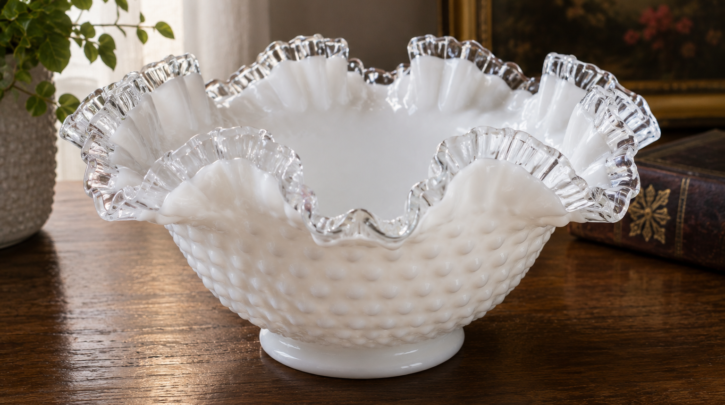
Silver Crest pairs a white milk glass base with a clear, crimped or ruffled edge, creating a distinctly different visual effect from Hobnail’s raised-bump texture despite both falling under Fenton’s broader milk glass output. The delicate ruffled edges that define Silver Crest are also notably prone to chipping, which makes condition an especially important factor for this specific line.
A Quick Reference
| Line | Look | Era |
|---|---|---|
| Burmese | Pink-to-yellow heat-sensitive gradient | Historic, ongoing revivals |
| Opalescent | Colored base with white opalescent edges | Multiple eras |
| Custard | Opaque ivory-yellow, often hand-painted | Multiple eras |
| Slag | Marbled, swirled multi-color | Multiple eras |
| Rosalene | Opaque pink with white cloud swirl | 1970s onward |
| Silver Crest | White base, clear crimped/ruffled edge | Mid-century |
Why Knowing These Lines Matters
Recognizing these signature colors and lines by sight, separate from Hobnail and carnival glass, rounds out a genuinely complete picture of what makes Fenton such a significant name in American glass history; see our value guide for how these different lines compare in typical collector value.
Modern Revivals of Historic Colors
Fenton periodically revisited some of its historic art glass colors, including Burmese, in later decades, which means a genuinely accurate color match doesn’t automatically confirm an early production date on its own — combining color recognition with the mark and pattern knowledge covered elsewhere on this site gives a much more complete picture than color alone; see our marks and logos guide for how that combination works in practice.
Collecting a Single Color Line
Many serious Fenton collectors eventually specialize in just one signature color — building a Burmese collection, or an opalescent collection, specifically — since the depth of variation within any single line, across different shapes and decades, is enough to sustain years of focused collecting on its own.
How These Lines Relate to the Rest of Fenton’s Output
It’s worth remembering that these specialty art glass lines existed alongside, not instead of, Fenton’s much larger Hobnail and carnival glass production — the company ran multiple product lines simultaneously across most of its history, which is exactly why a single Fenton catalog from any given year could include Hobnail candy dishes, Burmese vases, and carnival glass bowls all at once.
That breadth of simultaneous production is part of what makes Fenton such a rewarding, if occasionally overwhelming, company to collect seriously.