
Milk glass has a surprisingly long history — opaque white glass was being made in Venice as early as the 16th century — but the pieces American collectors actually chase today trace to two much more recent periods: Victorian-era decorative glass and a massive mid-20th-century home decor revival.
European Origins
Venetian glassmakers produced opaque white glass, sometimes called opaline or opal glass, centuries before it became an American collecting category, and the style later spread to English glasshouses, including Bristol, which lent its name to a related opaque glass tradition. This early European production is largely a historical footnote for American collectors rather than something that regularly turns up in US estate sales and antique malls.
The Victorian American Boom
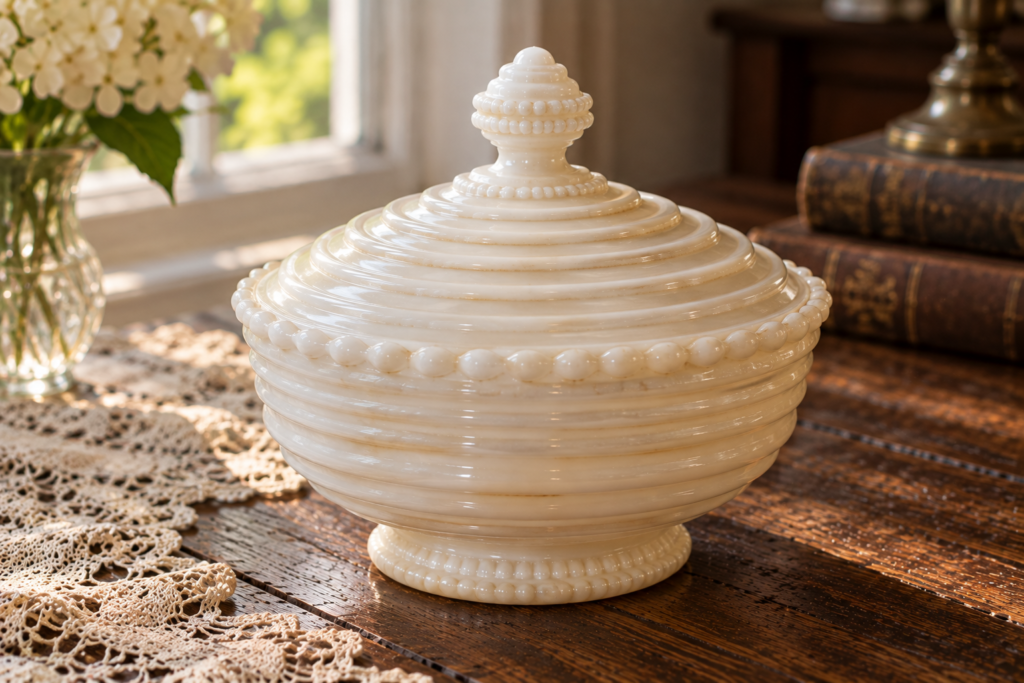
American milk glass production took off in the 1870s through the 1890s, with numerous glasshouses producing decorative vases, compotes, and covered dishes aimed at the Victorian taste for ornate, detailed tableware and decor. This era’s pieces tend to show more elaborate figural and decorative detail than the simpler, more streamlined designs that would dominate decades later.
The Mid-Century Hobnail Revival
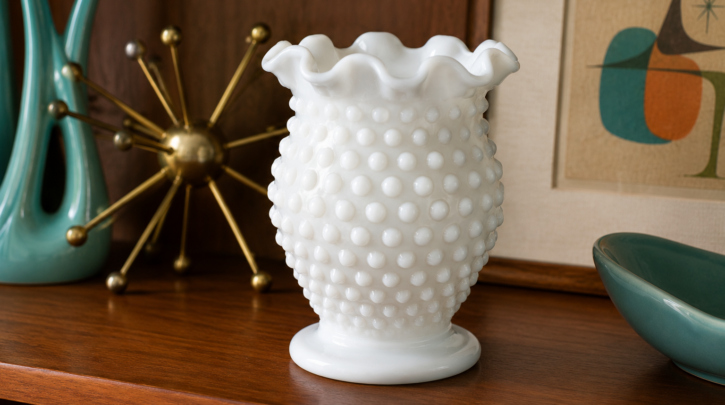
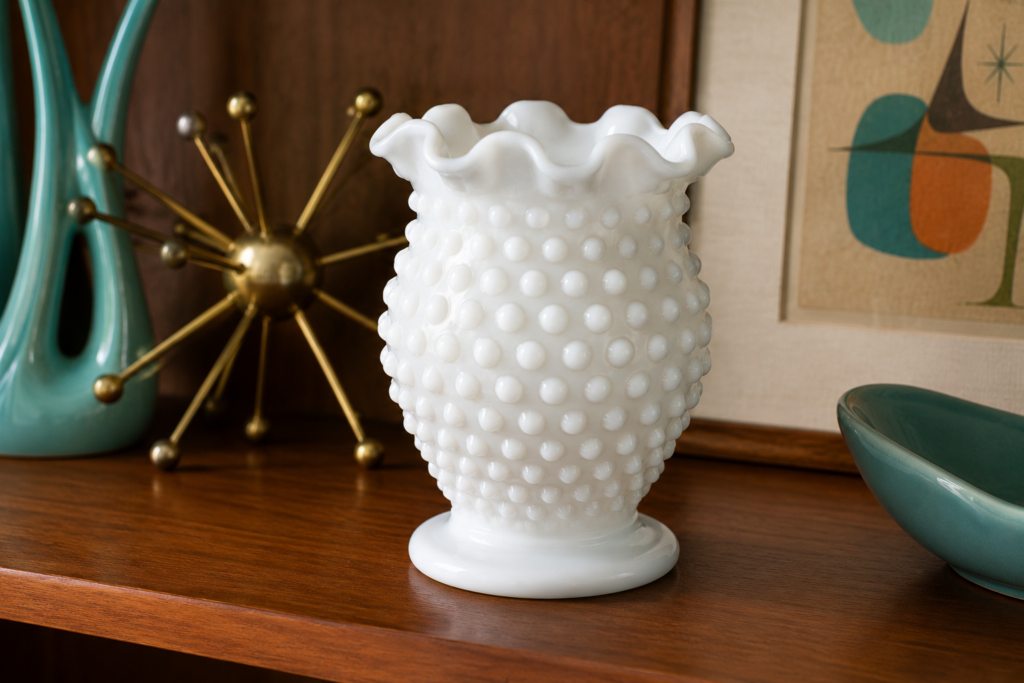
Milk glass fell out of fashion for decades before a massive revival in the 1950s and 1960s, when it became an enormously popular home decor choice — and Fenton’s Hobnail pattern, with its raised, bumpy texture, became essentially synonymous with milk glass for an entire generation of American households. This mid-century wave produced vastly more surviving pieces than the smaller Victorian-era run, which is a big part of why common Hobnail pieces remain so affordable and widely available today.
Fenton Art Glass
Fenton was the dominant force behind the mid-century milk glass boom, producing Hobnail and numerous other patterns in enormous quantity across decades; see our Fenton identification guide for how Fenton’s broader mark history helps date specific milk glass pieces alongside their other product lines.
Westmoreland Glass
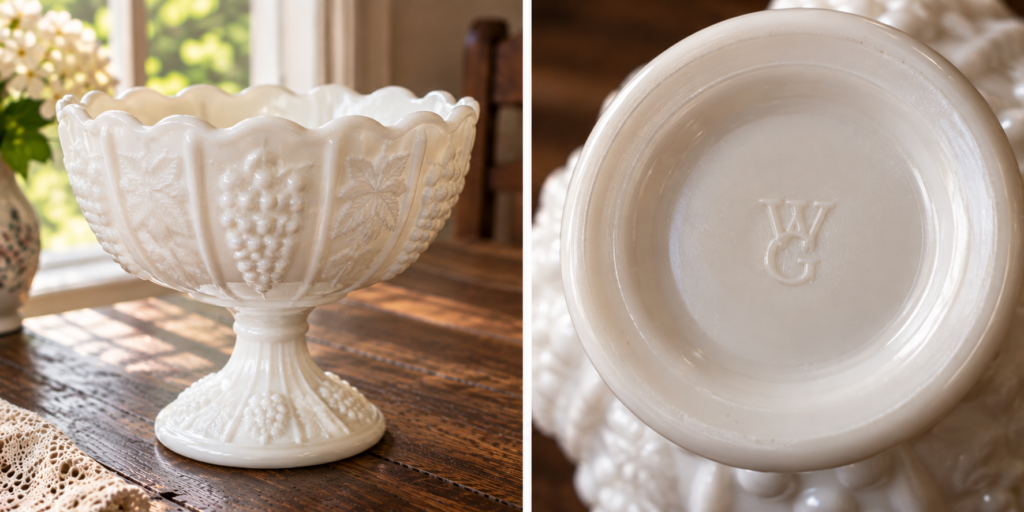
Westmoreland is widely regarded among collectors for especially high-quality, detailed milk glass, often featuring intricate figural and lace-edge patterns, and the company’s reputation for craftsmanship keeps its pieces desirable even relative to the much larger Fenton output. Westmoreland closed in 1984, which caps its total production at a meaningfully smaller volume than companies that continued operating afterward.
McKee, Anchor Hocking, Indiana Glass, and Others
McKee Glass, Anchor Hocking, Indiana Glass, L.E. Smith, and Imperial Glass all produced milk glass in varying volumes during the mid-century boom, each with their own pattern lines and, in some cases, distinctive maker’s marks worth learning to recognize alongside the more dominant Fenton and Westmoreland output.
Why This History Matters for Collecting
Knowing which era and maker produced a given piece directly shapes expectations around rarity and value — a Victorian piece is competing against a much smaller surviving population than a mid-century Fenton Hobnail piece, even before considering pattern or condition; see our value guide for how era and maker combine with other factors to determine what a specific piece is worth.
Why the Revival Happened When It Did
The mid-century milk glass boom lines up closely with a broader post-war shift toward affordable, mass-produced home decor, as new American households furnished homes on growing but still modest budgets — milk glass offered an elegant, formal-looking tableware option at a price point far below fine china or genuine porcelain, which helps explain why it caught on so broadly and so quickly across the country.
The End of an Era
Westmoreland’s 1984 closure and the broader decline of American glass manufacturing through the later 20th century mark a natural end point for domestic milk glass production at the scale seen mid-century, even though some manufacturers, including Fenton for a time, continued producing milk glass in smaller volumes for years afterward.
Milk Glass in the Broader Antiques Market Today
Milk glass has gone through its own cycles of collector fashion since the mid-century boom, with periods of stronger and weaker demand as home decor trends shift — a farmhouse or cottage-style decorating trend, for example, tends to bring renewed attention to milk glass as a decorative accent, which can noticeably affect prices for common pieces even without any change in actual rarity.
A Category Shaped by Two Distinct Booms
Understanding milk glass ultimately comes down to recognizing it as a category defined by two separate historical moments rather than one continuous tradition — a Victorian decorative movement and a mid-century mass-market revival — and most of the identification and value questions collectors run into trace directly back to figuring out which of those two moments a given piece actually belongs to.