
Fire-King Jadeite — a pale, opaque green glass made by Anchor Hocking, not Corning — is one of the most recognizable and actively collected vintage American kitchenware colors, with a revival story that’s genuinely tied to a specific, well-documented moment in popular culture.
What Fire-King Actually Is
Fire-King was Anchor Hocking’s brand of heat-resistant glass tableware and bakeware, produced roughly from 1942 through 1976, distinct from and unrelated to Corning’s Pyrex line despite both brands occupying similar collecting territory today; see our vintage Pyrex guide for how the two brands compare.
Jadeite: The Signature Color
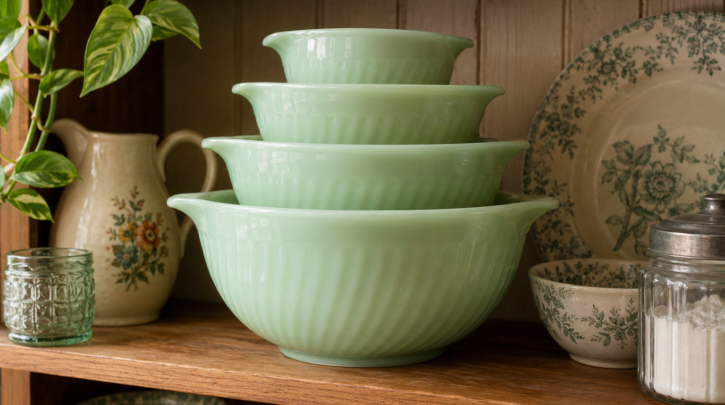
Jadeite is a pale, opaque green glass used across an enormous range of Fire-King forms — mixing bowls, mugs, plates, refrigerator dishes — and it’s become the brand’s single most recognized and sought-after color by a wide margin.
Jadeite Does Not Contain Uranium
Despite the color similarity to some uranium glass and occasional confusion among newer collectors, Fire-King Jadeite’s green color comes from different mineral colorants, not uranium content, and it does not glow under UV blacklight the way genuine uranium or vaseline glass does; see our uranium and vaseline glass guide for how that entirely separate phenomenon actually works, since the two categories get mixed up often enough to be worth explicitly clarifying.
The Martha Stewart Effect
Jadeite’s popularity surged in the 1990s after Martha Stewart publicly collected and featured it, introducing the color to a much wider decorating and collecting audience than it had reached before — a well-documented example of a single public figure’s taste meaningfully reshaping demand and pricing in a specific antiques category.
Restaurant Ware
Beyond household bakeware, Fire-King produced thick, heavy-duty Jadeite restaurant and diner ware, including the widely recognized Jane Ray pattern, built for institutional durability rather than home use. This restaurant ware has its own dedicated following among collectors who specifically favor its sturdier, more utilitarian look and feel compared to lighter household pieces.
Other Fire-King Colors
Beyond Jadeite, Fire-King produced Azurite (a pale blue), Forest Green, Turquoise Blue, Peach Lustre, and Anchorwhite or Ivory, each with a smaller but genuine collector following of its own — Jadeite simply dominates the category’s popular recognition by a wide margin.
Modern Jadeite-Style Glass Is Not Vintage Fire-King
Since the 2000s, other companies — including a Martha Stewart-branded product line and manufacturers like Mosser Glass — have produced new jadeite-colored glass that resembles the vintage look without being genuine vintage Fire-King, which means color alone doesn’t confirm authenticity. Checking form, weight, and any markings against known Fire-King references matters just as much here as the reproduction checks covered elsewhere on this site for other glass categories.
Getting Started
Common Jadeite mixing bowls and mugs remain a genuinely accessible entry point into this category, while restaurant ware and less common forms offer more depth for a collector ready to specialize further; see our general antique glass identification guide for techniques that apply across Fire-King just as they do everywhere else on this site.
Displaying a Jadeite Collection
Jadeite’s soft, uniform color makes it especially well suited to a cohesive open-shelf display, which is part of why it became such a popular decorating choice following its 1990s revival — a full shelf of Jadeite mixing bowls and mugs creates a visually calm, collected look that’s genuinely different from the bolder, more varied color palette of something like Depression glass or carnival glass.
Condition and Everyday Use
Because so much Jadeite was originally everyday kitchenware, and restaurant ware specifically was built for institutional durability, finding pieces in genuinely excellent condition is often easier here than in more delicate decorative glass categories — though chips and cracks still meaningfully reduce value, and the same careful, gentle cleaning approach used for other vintage glass applies equally well to Jadeite; see our cleaning guide for general care that applies across every category on this site.
Jadeite’s Broader Cultural Moment
The Martha Stewart-driven revival of the 1990s is a genuinely instructive example of how quickly a single influential collector’s public taste can reshape an entire antiques category’s demand and pricing — worth keeping in mind as a broader lesson about how collector trends form, not just as trivia specific to this one color.
It’s a genuinely good case study for how much personal taste, publicized widely enough, can move an entire market.