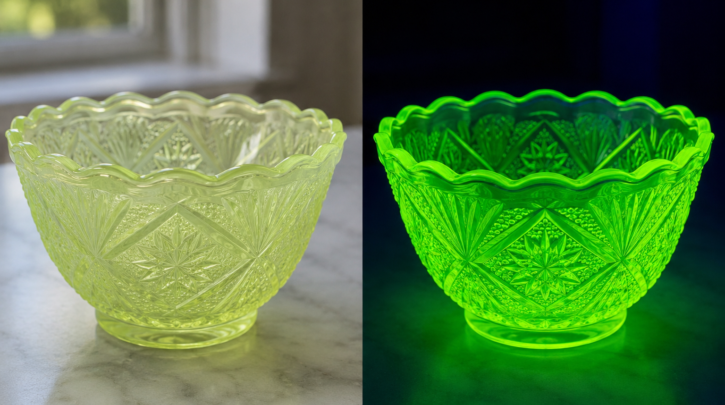

Uranium glass is exactly what it sounds like — glass made with actual uranium oxide added to the batch as a colorant, historically produced from the 1830s through the mid-20th century, and it’s one of the most genuinely fun categories in antique glass collecting thanks to a reliable, dramatic party trick: it glows bright green under UV blacklight.
What Uranium Glass Actually Is
Uranium oxide was used as a glass colorant and clarifying agent, producing colors ranging from pale yellow-green to a more vivid green depending on concentration and the presence of other elements in the formula. “Vaseline glass” specifically refers to a particular yellow-green shade resembling petroleum jelly, while “uranium glass” is the broader category covering that color and several others, including some custard glass and even Fenton’s Burmese, which uses uranium alongside gold in its formula; see our Fenton colors guide for that specific connection.
Why It Glows
Under ultraviolet light, the uranium content causes the glass to fluoresce a bright, distinctive green, regardless of what color the glass appears under normal lighting — a piece that looks pale yellow in daylight can glow just as brightly as one that looks more obviously green. This is a genuinely reliable identification test, since the glow only happens with real uranium content and doesn’t depend on guessing at visible color alone.
Production History
Uranium glass production slowed considerably during and after World War II, as uranium became a strategically controlled material tied to nuclear weapons development, before resuming in smaller quantities in later decades once controls eased. This production gap is part of why uranium glass spans a genuinely wide range of ages, from 19th-century pieces through Depression-era glassware into more recent, smaller-volume production.
Is It Safe?
Uranium glass emits genuinely low levels of radiation, and the general expert consensus is that owning, displaying, and normally handling it poses minimal risk. As with any older glass item, avoiding prolonged use as everyday food or drinkware and not grinding or ingesting glass material are sensible precautions that apply broadly to antique glass handling rather than being specific to uranium content — if you have specific health concerns, consulting current guidance from a radiation safety authority is the appropriate step rather than relying on general collector consensus alone.
Distinguishing Uranium Glow From Other Glass Fluorescence
Uranium glass isn’t the only vintage glass that reacts to UV light — some older milk glass fluoresces faintly due to manganese content, a genuinely different mechanism that produces a fainter, less consistent glow; see our milk glass identification guide for that distinction. Fire-King Jadeite, despite its green color sometimes causing confusion, contains no uranium at all and doesn’t glow under UV; see our Fire-King Jadeite guide for that specific clarification.
Collecting Appeal
The interactive blacklight element gives uranium glass a genuinely different collecting experience from other categories on this site — some collectors specifically host blacklight display sessions to show off a collection’s glow, which is a level of hands-on engagement most other antique glass simply doesn’t offer.
Where Uranium Glass Overlaps With Other Categories
Uranium content shows up across multiple categories rather than forming one isolated collecting niche — certain Depression glass colors, carnival glass’s canary and vaseline tones, and specific Fenton opalescent pieces all include genuine uranium glass alongside their broader category identity; see our Depression glass colors guide for where that overlap comes up in that category specifically.
Buying a Blacklight
A simple, inexpensive UV flashlight is all that’s needed to test a piece at home, and it’s a genuinely worthwhile tool for anyone collecting across multiple glass categories, given how often uranium content turns up in unexpected places — testing a piece you already own sometimes reveals a genuine uranium content you never knew was there.
Testing Etiquette When Shopping
Bringing a small UV flashlight to estate sales and antique malls to check glassware is common and generally accepted practice among collectors, though it’s courteous to ask a shop owner before testing items, particularly anything already carefully displayed behind glass or in a locked case.
Most shop owners are happy to allow it, and many find it genuinely interesting themselves if they haven’t tested their own inventory before.
Either way, the discovery moment when a piece lights up unexpectedly under UV is one of the more genuinely delightful surprises in the hobby.