
Not every piece in your cabinet needs a professional appraisal — and several of the most common questions people pay an appraiser to answer can actually be checked at home first. A $15 UV blacklight can confirm genuine uranium glass in under a minute. A close look at a mark can rule out half the “is this rare?” guesswork. This guide walks through what you can verify yourself, and where those DIY checks stop and a paid appraisal genuinely earns its cost.
Start With the Blacklight Test
If a piece is greenish, yellow-green, or an unusual pale color and you suspect it might be genuine uranium glass — sometimes called vaseline glass — a 365nm UV blacklight is the fastest and cheapest verification step available, and it’s one you can do yourself before spending a dime on a professional opinion.
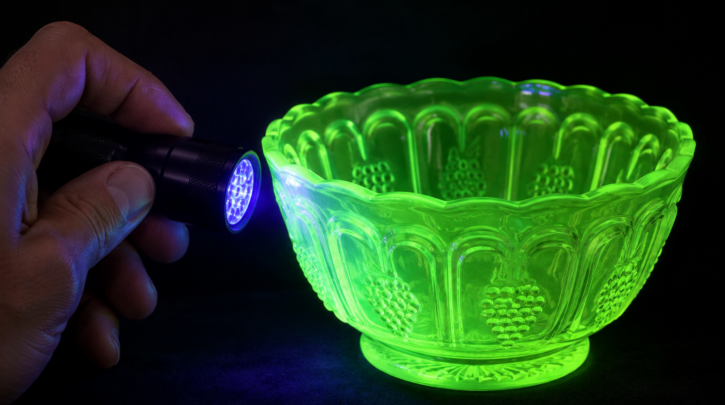
Genuine uranium glass contains roughly 0.1–2% uranium oxide, and under a 365nm blacklight in a dark room it glows a distinct, unmistakable neon green — not a dull shimmer or a faint tint, but a bright fluorescence that’s immediately obvious once you’ve seen it. Reproductions and ordinary green glass that simply resemble the color typically don’t glow this way at all, or glow a weak, inconsistent, or differently colored fluorescence, because they lack the uranium content that causes the reaction. For a deeper look at what colors and patterns to expect from real uranium glass, see our uranium and vaseline glass guide.
- Use a 365nm UV blacklight specifically — cheaper 395nm “blacklight” flashlights sold for novelty use are less reliable for this test and can produce a weaker or misleading response.
- Test in as dark a room as possible; residual daylight or bright indoor lighting will wash out a faint glow and make the result harder to read.
- Compare the piece against a known reference if you have one, or against photos/videos of confirmed uranium glass under blacklight, since the neon-green fluorescence is distinctive enough to recognize once you’ve seen a genuine example.
- Remember that a negative result doesn’t necessarily mean the piece is worthless or fake — it just means it isn’t uranium glass. Plenty of valuable antique glass contains no uranium at all.
This test alone won’t tell you what a piece is worth, and it isn’t documentation an insurer will accept — but it answers one specific authenticity question quickly, for free, and it’s worth doing before you pay anyone to tell you the same thing.
Other Things Worth Checking Yourself First
The blacklight test is the clearest DIY step, but it’s not the only one. Before booking a paid appraisal, it’s worth working through a short list of checks that don’t require special equipment or professional training:
- Look for a mark, but don’t stop at “is there one.” Note whether it’s molded into the glass, acid-etched, or a paper label — that distinction matters for attribution and is one of the things a paid appraiser will examine closely (more on this below).
- Check weight, color consistency, and mold seams. Reproductions are often lighter or heavier than expected, show unnaturally uniform color, or have seam lines in places period pieces wouldn’t.
- Compare against reference photos for the pattern or maker you suspect. Our identification and pattern guides across this site are a reasonable free starting point before you pay for a professional opinion.
- Check recent completed sales, not just asking prices, for comparable pieces — this gives a rough, real-world sense of value without any cost.
None of this replaces a professional’s trained eye, but working through it first means you’ll walk into any paid appraisal already knowing what you have — and asking sharper, more specific questions.
When a Paid Appraisal Is Actually Worth It
Once you’ve done what you can yourself, a handful of situations genuinely justify paying a professional rather than relying on DIY verification:
Maker Attribution That Hinges on the Mark Itself
Distinguishing an acid-etched manufacturer’s mark from a paper label, or a molded mark from a later addition, is exactly the kind of detail an experienced appraiser is trained to read — acid-etched marks are typically original to manufacture and far harder to fake convincingly than a paper label, which can be added, removed, or misattributed long after the piece was made. If the entire value case for a piece rests on who made it, this is worth professional confirmation rather than a guess.
Rare Art Glass
Pieces that could be genuine art glass rarities — Burmese glass, Peachblow, a documented Millersburg piece, or similar — deserve professional confirmation before a major sale or insurance decision. These categories carry enough value spread between genuine and reproduction pieces that a confident-sounding online comparison isn’t a substitute for someone who handles this glass regularly. See our carnival glass value guide and the other category guides across this site for a sense of what genuine rarity looks like before you assume you’ve found one.
Insurance and Estate Purposes
Insurance coverage for a genuinely valuable collection typically requires documented, professional valuation rather than a personal estimate or a DIY test result — a blacklight glow or a comparable-sales search won’t satisfy an insurer’s documentation requirements. Estate settlement among multiple heirs similarly benefits from a neutral, professional valuation that removes personal bias from dividing inherited pieces, since no self-check can substitute for a disinterested third-party opinion in that situation.
Informal vs. Formal Appraisal
An informal opinion from an experienced dealer or collector — often free or low-cost — gives a reasonable ballpark estimate useful for everyday decisions, but it isn’t documented in a way that satisfies insurance or legal requirements. A formal written appraisal from a certified appraiser costs more but provides the documentation actually needed for insurance coverage or estate purposes.
Finding a Qualified Appraiser
Look specifically for an appraiser experienced with antique glass rather than a general antiques generalist, and check for credentials from a recognized professional body. The International Society of Appraisers, the Appraisers Association of America, and the American Society of Appraisers are all established organizations that certify appraisers to recognized professional standards, and most offer a searchable directory to find a credentialed member near you.
A Red Flag Worth Knowing
Reputable appraisers charge a flat fee or an hourly rate, never a percentage of the appraised value — a percentage-based fee creates a direct financial incentive for the appraiser to inflate the value, which professional appraisal industry standards consider an ethical conflict of interest. An appraiser offering to work for a cut of the final valuation is worth avoiding regardless of how reasonable the rest of their pitch sounds.
Preparing for an Appraisal
Clean pieces gently beforehand so the appraiser can see them clearly without dust or grime obscuring detail, but avoid any deeper restoration attempt right before an appraisal; see our cleaning guide for the safe approach. Gather any known provenance or family history alongside the pieces themselves, and bring the results of your own DIY checks — blacklight results, mark photos, comparable sales you found — so the appraiser can build on what you already know rather than starting from zero. Prepare specific questions in advance, too: current value, insurance replacement value, and authenticity concerns are often different questions with different answers.
Appraisal vs. Authentication
It’s worth distinguishing between an appraisal, which estimates monetary value, and authentication, which confirms a piece is genuinely what it’s claimed to be. A thorough appraiser typically does both together, but for a piece where authenticity is the main question rather than value specifically — say, whether a mark is original or whether the glow under blacklight actually settles the uranium-content question — being clear about which question you actually need answered helps the appraiser focus their assessment appropriately.
Cost Expectations
Formal appraisal fees vary considerably depending on the appraiser’s experience, location, and the complexity of the collection being assessed, but a reasonable flat or hourly fee for a focused antique glass appraisal is typically a small fraction of the value being assessed for anything genuinely worth the trouble of a formal appraisal in the first place.
Weighed against the cost of insuring, selling, or dividing a valuable collection without accurate information, that fee is almost always money well spent — but only after the free checks, like the blacklight test, have been ruled out or confirmed first.
What Happens After the Appraisal
A completed appraisal document is worth keeping in a safe place alongside insurance records and any other documentation for the collection. Collectible glass values genuinely shift with market conditions, so treat an appraisal as a well-informed snapshot rather than a permanent figure — it’s reasonable to revisit and update a formal appraisal every several years for a genuinely valuable collection, since both market conditions and the collection itself may have changed since the original assessment.