
Depression glass is mass-produced glassware made in the US roughly between 1929 and the early 1940s, sold cheaply or given away as promotions during the Great Depression — and it’s one of the most collected, most reproduced categories of American glassware, which makes identification genuinely worth getting right before you buy or sell.
What Makes Glass ‘Depression Glass’
The defining trait is machine-pressed molding rather than hand-cutting or hand-blowing, which let manufacturers produce huge quantities cheaply enough to give pieces away in cereal boxes, at movie theaters, and as gas station promotions, or sell them for pennies in dime stores. That low original cost is exactly why complete sets are relatively hard to find today — pieces were used hard, broken, and mismatched over nearly a century, which is part of what drives collector interest in filling out a set.
Major Manufacturers
Hazel-Atlas, Hocking Glass (later Anchor Hocking), Indiana Glass, Jeannette Glass, MacBeth-Evans, Federal Glass, Imperial Glass, and the U.S. Glass Company were among the largest producers, each running numerous patterns simultaneously. Most collectors identify pieces by pattern first and manufacturer second, since pattern names — almost always assigned by collectors decades later rather than by the original companies — are what the hobby actually organizes around.
Start With the Pattern
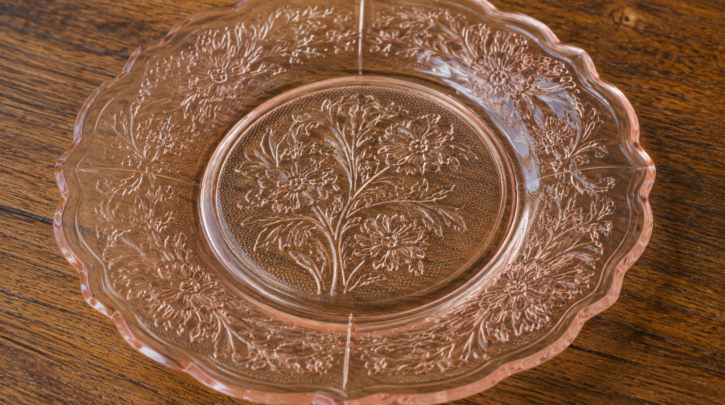
Every Depression glass pattern has a distinctive repeating motif pressed into the glass — flowers, geometric designs, ribbing, scrollwork — and learning to recognize a handful of the most common patterns by sight is the single most useful identification skill; see our patterns guide for the patterns worth learning first.
Then Check the Color
Color narrows things down further, since most patterns were only produced in a specific, limited set of colors — pink and green are the most common across the category as a whole, but a piece in a color that pattern was never actually made in is one of the clearest reproduction red flags; see our colors guide for how color affects both identification and value.
Mold Seams and Weight
Genuine Depression glass shows visible mold seams from the pressing process, but the pattern detail itself is generally crisp and well-defined, since it came from an original, first-generation mold. Pieces also tend to be relatively thin and light for their size, a direct result of the cost-cutting mass production that defined the category — a suspiciously heavy or thick piece in a classic pattern is worth a closer look.
The Reproduction Problem
Several of the most popular Depression glass patterns have been reproduced, sometimes for decades, and some reproductions are good enough to fool a quick glance — this is genuinely the single biggest identification challenge in the hobby, not a minor footnote. Cherry Blossom, Mayfair, Sharon, and Madrid are among the most heavily reproduced patterns, and getting familiar with the specific tells for each is worth real time; see our reproductions guide for pattern-specific detail.
Putting It All Together
In practice, identification is rarely one single test — it’s pattern recognition, color, mold-seam sharpness, and weight considered together, cross-checked against a reliable reference when a piece seems unusually valuable or unusually well-preserved for its supposed age; see our general antique glass identification guide for techniques that apply beyond Depression glass specifically.
Where and How Pieces Turn Up Today
Estate sales, antique malls, inherited boxes from a relative’s home, and online marketplaces are the most common places Depression glass surfaces today, and each context comes with different identification stakes — a $5 estate sale flea find carries far less risk than a listing priced as a rare pattern; see our buying guide for what to expect at each type of source.
Building Identification Skill Over Time
Handling genuine pieces regularly — at shows, shops, or through a local collector club — builds a tactile sense of weight, mold-seam feel, and pattern crispness that’s genuinely hard to get from photos alone. Most experienced collectors describe their identification skill as something that developed gradually through repeated handling, not something learned from a single guide in one sitting.
Treat this guide as the starting framework, and expect your own eye to keep sharpening every time you pick up a new piece.