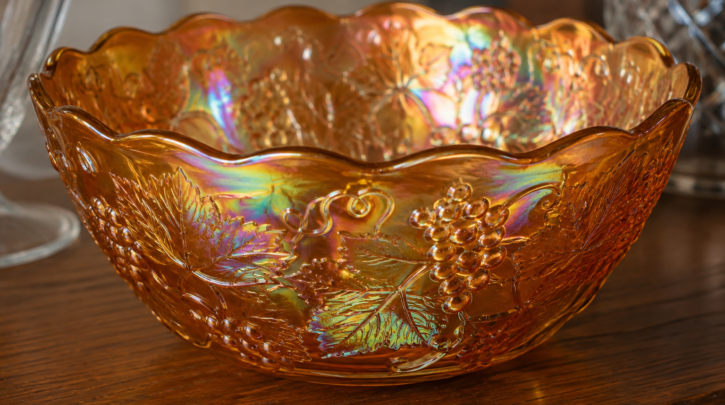

Carnival glass is pressed glass finished with an iridescent, metallic surface coating that shimmers with shifting rainbow color — and despite the name, it wasn’t originally made as carnival prize glass at all, which is one of the more interesting quirks of how this category got its name.
Where the Name Actually Comes From
When it was first produced in the early 1900s, this iridescent pressed glass was marketed as an affordable alternative to expensive art glass like Tiffany’s genuine iridescent Favrile line, sold to middle-class households who wanted a similar shimmering look without the luxury price tag. It only picked up the “carnival glass” nickname decades later, after it fell out of fashion and leftover stock got liquidated cheaply, eventually ending up as prize glass given away at carnivals and fairs — the name describes glass’s second life, not its original purpose.
How the Iridescent Finish Is Made
After a piece is pressed into its pattern, it’s sprayed with a solution of metallic salts and refired at a lower temperature, which fuses a thin, iridescent coating onto the surface. This coating is what creates the shifting rainbow shimmer carnival glass is known for, sitting on top of the base glass color rather than being mixed into the glass itself.
Classic Era vs. Contemporary Production
The classic era of carnival glass production runs roughly from the late 1900s through the 1920s, and it’s this era that most serious collectors focus on. Production picked up again starting in the 1960s using generally different color palettes and often different, sometimes marked, molds — contemporary carnival glass is legitimate and can be attractive in its own right, but it’s worth knowing which era you’re looking at, since classic-era pieces are almost always worth more; see our makers guide for how the major producers span both periods.
Start With the Pattern
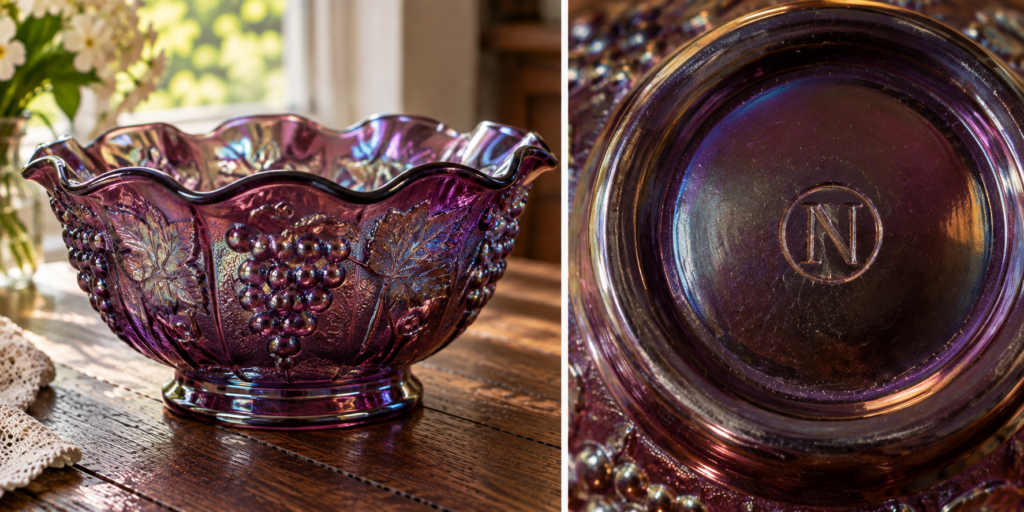
Hundreds of carnival glass patterns exist, ranging from grape-and-vine motifs to peacock designs to geometric patterns, and recognizing a pattern is usually the fastest way to narrow down both maker and era. Grape and Cable, closely associated with Northwood, and various Fenton peacock patterns are among the most iconic and widely recognized designs in the category.
Then Check the Base Color
Base color — the actual color of the glass underneath the iridescent coating — is a separate identification factor from the shimmering surface finish itself, and it’s one of the biggest value drivers in the whole category; see our colors guide for how to check base color and why marigold, the most common color, sits at the opposite end of the value spectrum from rarer colors like red.
Marks Are the Exception, Not the Rule
Most carnival glass pieces were never marked with a maker’s name at all, which makes pattern recognition considerably more reliable than hunting for a mark. Northwood is the notable exception, having marked many of its pieces with a distinctive underlined “N” inside a circle; see our makers guide for this and other maker-specific identification clues.
Building Identification Skill
As with most collectible glass, handling genuine pieces regularly — at shows, shops, or through a collector club — builds a feel for the weight, pattern crispness, and iridescent quality of authentic classic-era pieces that’s hard to fully replicate from photos alone; see our general antique glass identification guide for techniques that carry over from other categories.
Where Carnival Glass Turns Up
Estate sales, inherited collections, and antique malls remain the most common sources for classic-era carnival glass, often mixed in with later contemporary pieces from the same makers without the seller necessarily knowing the difference; see our buying guide for what to expect across different sourcing options.
A Realistic First Session
A good starting approach for a new collector is picking up a handful of inexpensive marigold pieces first — common, affordable, and forgiving to learn on — before investing real money in a piece claimed to be a rare color or maker. Building confidence on lower-stakes pieces makes it much easier to recognize when something genuinely unusual crosses your path later.
Confidence built this way transfers directly — the same eye that learns to judge a marigold bowl’s weight and mold sharpness is the eye that will later spot something genuinely unusual with real conviction rather than guesswork.
Give yourself permission to be wrong occasionally while learning — even experienced dealers get surprised now and then, and that’s part of what keeps the hobby interesting.