
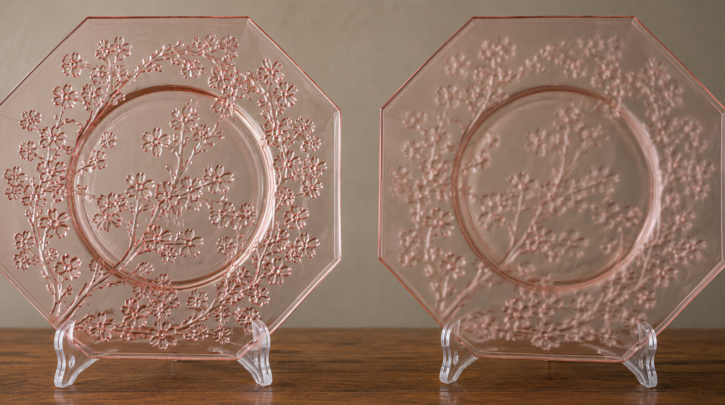

Reproductions are the single biggest identification challenge in Depression glass collecting, and they’ve been on the market long enough — in some cases since the 1970s — that plenty of “vintage” pieces in circulation today are actually decades-old reproductions rather than originals from the 1930s.
Why Reproductions Exist
Popular patterns with strong, sustained collector demand became attractive targets for reproduction manufacturers looking to sell affordable “vintage-style” glassware, and in at least one well-documented case — Indiana Glass’s 1976 bicentennial reissue of the Madrid pattern under the name Recollection — a major original manufacturer directly reran an old mold rather than an unrelated company copying the design.
Cherry Blossom: The Most Reproduced Pattern
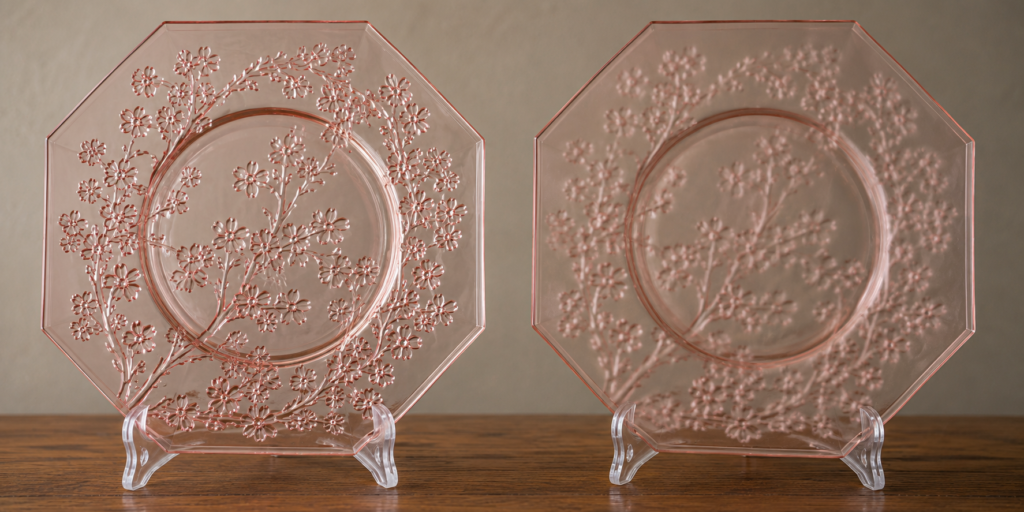
Cherry Blossom has been reproduced extensively since the 1970s, in colors and shapes that sometimes don’t match anything originally produced, which is exactly why it’s worth extra caution with this specific pattern. Common tells include less crisp branch-and-blossom detail compared to verified originals, and colors — including some blues and greens — that were never part of the original Jeannette Glass production run.
Mayfair Reproductions
Certain Mayfair shapes, particularly shot glasses and cookie jars, have been reproduced with noticeable differences in proportion and detail sharpness compared to original pieces, making side-by-side comparison against verified references especially useful before a serious Mayfair purchase.
Sharon and Madrid
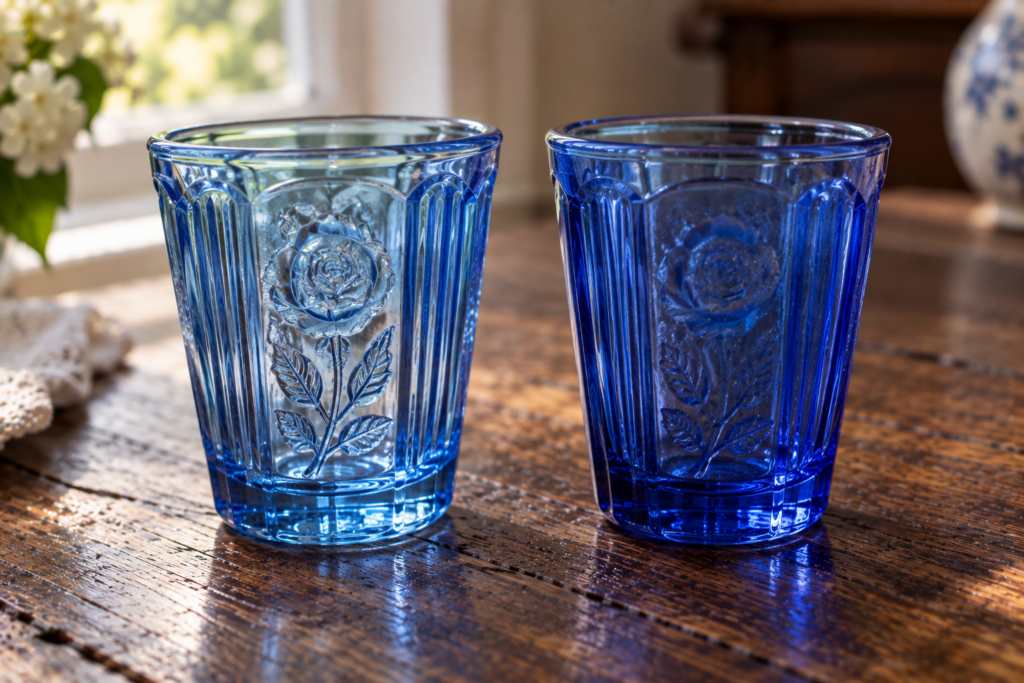
Sharon has seen reproduction activity in specific serving pieces, while Madrid’s direct 1976 reissue as Recollection means an entire modern production run exists using what was essentially the same tooling lineage as the originals — though Indiana Glass did mark the reissue differently, not every piece retains a clear, easily checked mark decades later.
Why Blurred Detail Is Such a Common Tell
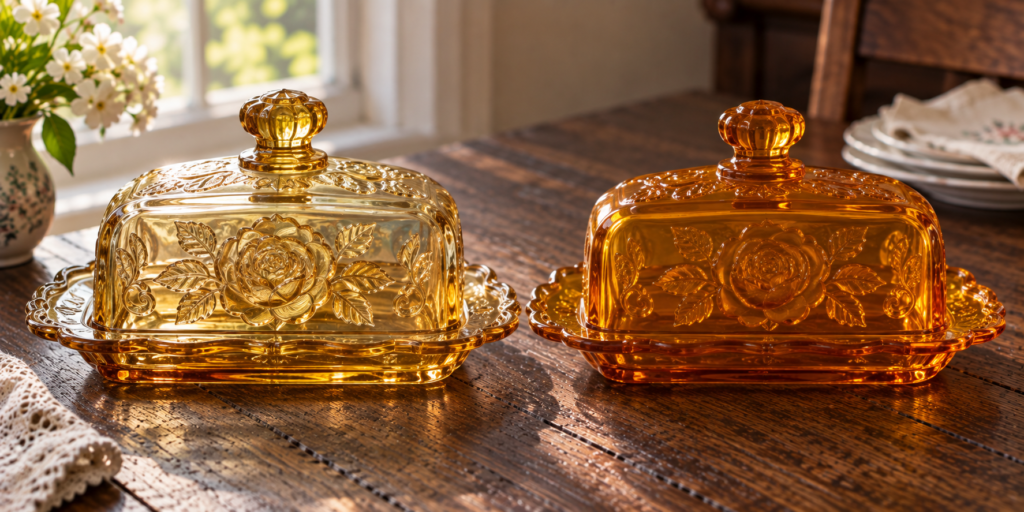
Many reproduction molds were created by taking a cast directly from an original piece rather than from the original manufacturer’s actual mold tooling, which is a process that loses fine detail with each generation — the resulting reproductions often show noticeably softer, mushier pattern definition than a genuine piece pressed from the original mold, even when the color and overall shape look right at a glance.
Weight and Thickness Differences
Reproductions sometimes run slightly heavier or thicker than originals, or occasionally lighter, depending on the specific manufacturing process used decades later — this isn’t a universal rule across every reproduction, but an unusual weight for a given pattern and shape is worth treating as one more data point rather than dismissing outright.
Checking Marks
Some reproductions carry an intentional mark distinguishing them from originals — Indiana Glass’s Recollection line, for example, used different markings than the original Madrid production — but relying on marks alone is risky, since not every reproduction is marked, and marks can wear away or go unnoticed by a casual seller who may not even know what they’re looking at.
When in Doubt, Compare and Ask
For any purchase that matters — an expensive piece, a rare color, a pattern with known reproduction issues — comparing directly against verified reference photos and, when the stakes are high enough, asking a specialist dealer or getting a professional opinion is worth the extra effort before committing to a purchase you can’t easily undo.
Reproductions Aren’t Worthless
A reproduction piece isn’t automatically junk — it can still be a perfectly nice piece of glass to use or display — but it’s worth dramatically less than a genuine original and should be represented honestly if you ever resell it. The problem isn’t owning reproductions; it’s paying original-piece prices for one without realizing what it actually is.
Building a Reference Library
Serious collectors typically build up a personal reference of verified original photos, either through dedicated price guides, collector club resources, or their own documented purchases, and lean on that reference whenever a new piece raises a question. This kind of accumulated reference is far more reliable over time than trying to remember every pattern-specific detail from memory alone.
The extra few minutes spent checking never costs as much as guessing wrong on a purchase you can’t return.